
01ARTICLE
Hybrid Production for Viral Content: Live Action, CGI and AI Together
Published on
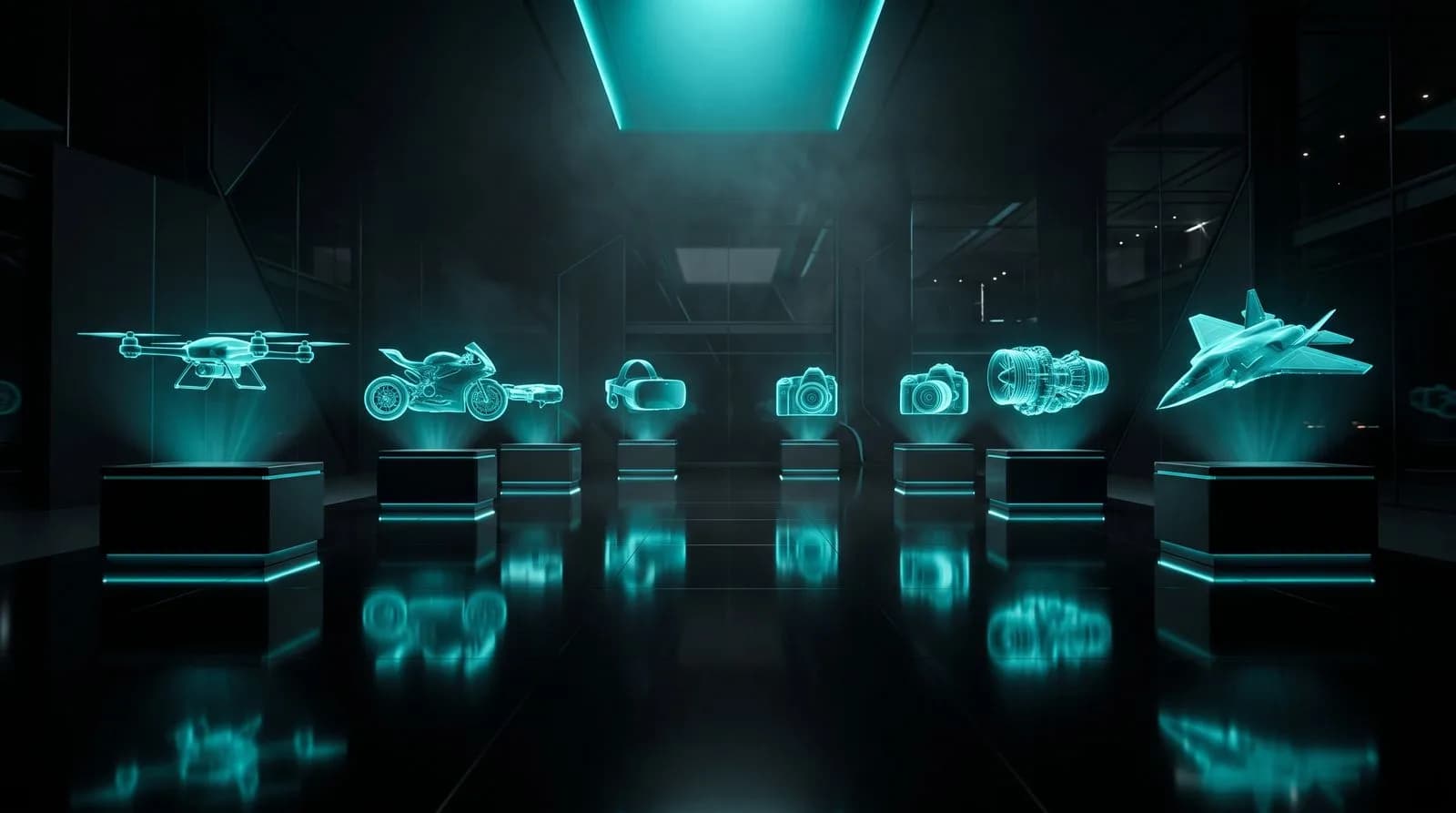
Look at the credits behind the content that actually performs on social media and you will struggle to find work made with a single tool. There is live action in one place, CGI in another, and AI somewhere in the pipeline. The mix has a name: hybrid production. So why are brands converging on this model, and why does social media reward the blend so consistently?
What hybrid production actually means
Hybrid production means combining live action, CGI and AI generation in a single workflow. None of them replaces the others; each tool does the job it is best at. The camera brings human faces, texture and a sense of place. CGI perfects the product and bends the laws of physics. AI delivers variation, speed and rapid concept exploration.
A typical example: for a beverage brand, a short scene is shot on a real street with real people. The product and the impossible effects around it are added in CGI. Then AI-assisted tools multiply the same idea into variations for different cities, lighting conditions and formats. One idea, one shoot day, dozens of assets.
Why social media rewards the mix
The first reason is the credibility anchor. Fully synthetic footage can create distance; live action tells the viewer 'this is a real place, these are real people'. When the CGI surprise lands on top of that real foundation, the effect compounds — it is the same logic that makes FOOH videos work.
The second reason is the first three seconds. Stopping power in a feed usually comes from an impossible element appearing inside a believable scene. The viewer experiences a brief conflict between what they see and the physics they know, and that conflict is what interrupts the scroll.
The third reason is volume and repetition. Algorithms reward consistent, high-frequency output. Producing several original pieces a week with traditional production alone is not financially realistic; in a hybrid model, one shoot day becomes a content pool that CGI and AI can feed for weeks. More attempts, more learning, better hit rate.
Viral content is not a lottery — it is probability engineering. The more quality attempts you make, the better your odds of landing one.
Building the right blend
The critical question in hybrid work is which part should be made with which tool. A practical split looks like this:
- Live action: Human performance, emotion, close-ups of hands and faces, the atmosphere of a location.
- CGI: Product perfection, impossible scenes, plays on scale, FOOH-style placements.
- AI: Concept exploration, background and environment variations, format and market adaptations, fast iteration.
Work that gets this split wrong is easy to spot. Content generated entirely with AI tends to feel sterile; projects that try to solve everything in camera blow past budgets and timelines.
A viral content agency's view
Speaking as a viral content agency, we can say this plainly: virality cannot be guaranteed, but its probability can be designed. A strong hook, a surprise grounded in real footage, the product visible in the first second, and a fast variation loop — when those four elements come together, the odds of content taking off rise sharply. This is exactly why hybrid production has become the standard working model at Clytech: publish, measure, learn, produce again. Running that loop on a traditional production calendar is impossible; with a hybrid pipeline, it is a weekly routine.