
01ARTICLE
What Is FOOH and What Does It Offer Brands?
Published on
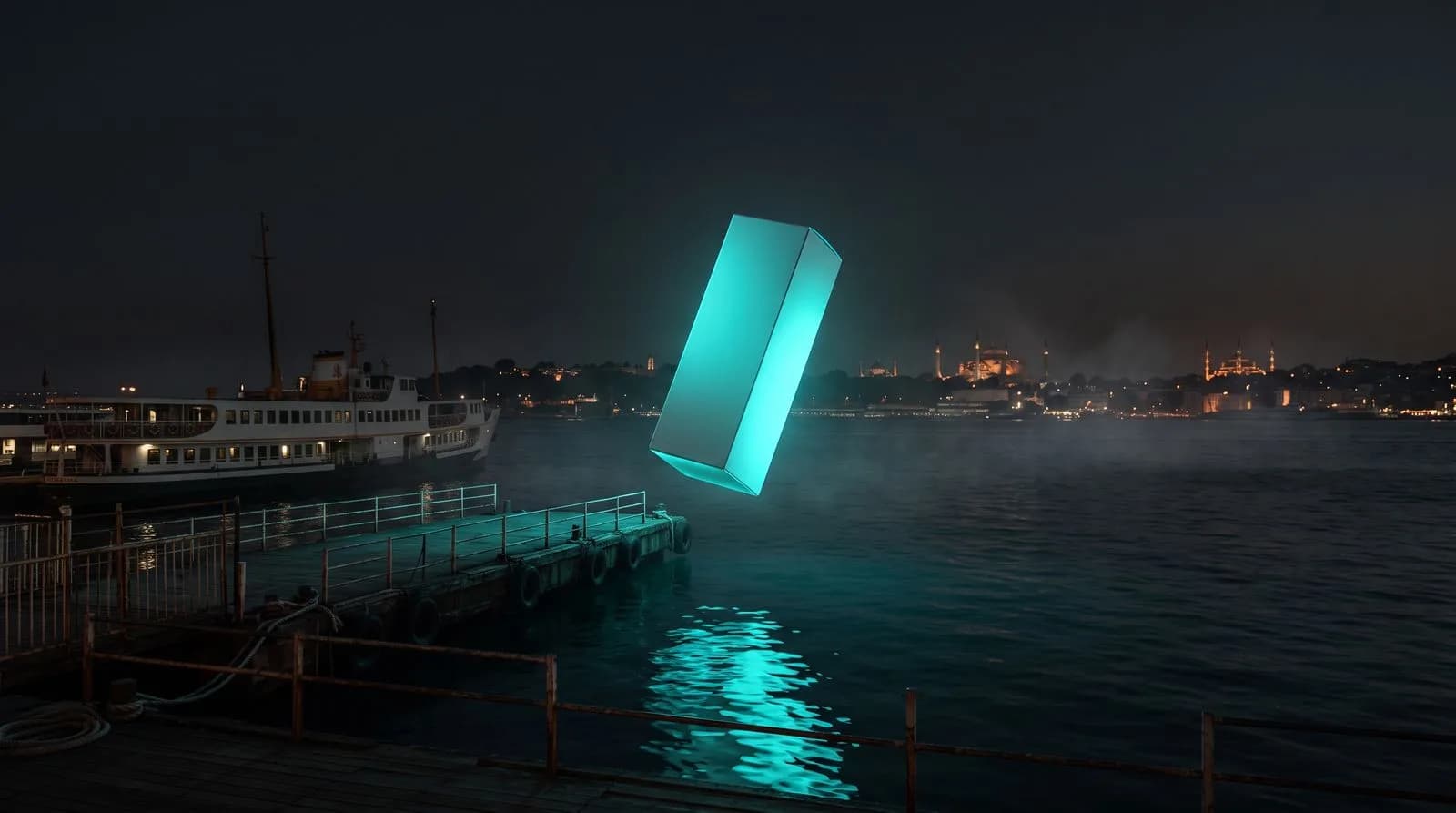
You have probably paused on one of these clips: a giant sneaker resting on a bridge, a building wrapped in animated lipstick packaging, or a perfume bottle drifting over the Bosphorus. They all belong to the same format: FOOH, short for fake out-of-home. It is advertising that looks like it exists in the real world but was never physically built.
What exactly is FOOH?
FOOH starts with real footage of a real location. A CGI studio then places computer-generated elements into that footage, matching the camera movement, lighting, shadows and reflections of the original plate. Done well, the result makes viewers stop mid-scroll and wonder whether what they are seeing could actually exist. That half-second of doubt is the whole point of the format.
The contrast with traditional out-of-home is obvious. There is no billboard to rent, no permits to chase and nothing to install. A FOOH video is designed for social media from the first frame, and social media is where it lives and spreads.
How brands use FOOH
The most common scenarios look like this:
- Product launches: Showing a new product at impossible scale in a landmark location is one of the most reliable ways to own the conversation on launch day.
- Brand awareness: Work that merges a product's packaging, colour or silhouette with the fabric of a city makes the brand's visual identity genuinely memorable.
- Seasonal campaigns: Reinterpreting an existing campaign visual as FOOH during holidays or sales periods turns the same message into a far more shareable asset.
- Events and collaborations: For concerts, festivals or capsule collections, a FOOH clip builds a kind of anticipation a press release never will.
Why FOOH goes viral
Most of the answer comes down to scale and surprise. When the human brain sees a familiar place at a broken scale, it stops; the scrolling reflex is interrupted. The 'is this real?' question moves into the comments, and the moment a debate starts, the algorithm pushes the content to more people.
The second factor is shareability. FOOH videos are short, work without sound and need no context — the perfect format to send to a friend with a 'look at this'. The third is the cost-to-impact ratio: compared with what a physical out-of-home campaign of similar reach would cost, a well-crafted FOOH film is a small production with an outsized footprint.
That one second where a viewer thinks 'wait, that cannot be real' is the most valuable moment you can buy in digital advertising today.
Getting it right
The threshold that separates convincing FOOH from work that falls flat is craft. A CGI element with the wrong light direction, a missing shadow or a mismatch against the camera move gets caught by viewers instantly — and the comments will say so. This is why the format rewards teams with real experience in photorealistic rendering and compositing rather than a quick template approach.
It also rewards strong locations, which is part of why Turkey has become fertile ground for the format. From the Istanbul skyline to Cappadocia, the backdrops are ready-made, and fashion, cosmetics, beverage and tech brands are now using FOOH as a regular part of their social calendars. At Clytech we spend most of our FOOH production time on the unglamorous details — shadows, reflections, camera matching — because in this format, believability is the entire product.
The takeaway: with the right idea and the right technical team, FOOH lets brands reach a far wider audience with a fraction of a traditional out-of-home budget. The novelty will not last forever, but for now, the brands that move early are collecting most of the attention.