
01ARTICLE
Published on
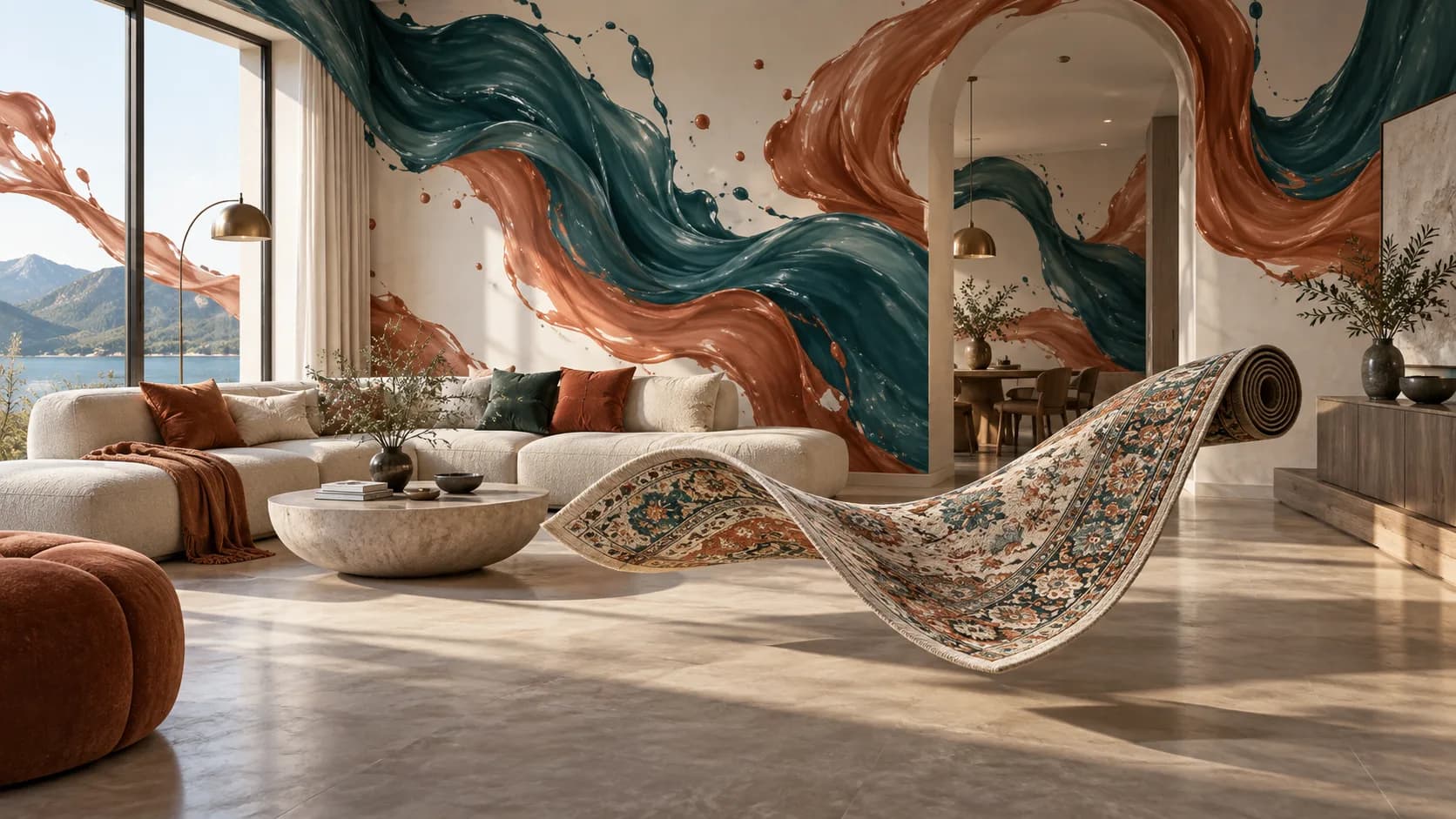
CGI advertising for home, interiors and building brands makes a product's hardest-to-show qualities visible: its colour, texture, pattern and the engineering inside it, in ways a camera alone can't. Paint spreading across a wall, the texture of a carpet up close or what happens inside a heating system can all be shown in close detail and with a cinematic feel. If you're planning a campaign in this category, this piece covers which approach suits which product, when CGI or live action is the right call, and four projects from Clytech.
The general production process and budget items are on our CGI ad film production page; here we focus on decisions specific to home and building brands.
Why are these products hard to show?
In home and building products, the value often sits where the eye can't see or the camera can't fit. With paint it's in the colour and the finish, with carpets in the pattern and texture, with heating systems in the technology working inside the unit. Live action shows the surface, but it often falls short when you need to show how a colour spreads, how a fibre is woven or how heat moves through a system.
The category has another challenge: wide product ranges. The same paint comes in many colours, the same carpet in different patterns and sizes. In CGI, a change of product colour or pattern is a material update rather than a reshoot, so several versions can come from the same scene.
The audience often splits in two as well. With building and heating products, an architect, an installer or a dealer often shapes the decision; with paint and carpets, the homeowner has the final say. The same CGI scene can serve both: cutaways and detail for the technical audience, a cinematic moment at home for the end user. Films made for technical audiences, trade fairs and sales decks are covered in our industrial 3D animation guide.
How does CGI show each product quality?
CGI puts the quality that drives the purchase at the centre. The table sums up, by product group, what's hard to show, common CGI approaches and what stands out in Clytech's work.
| Product group | Hard to show | Common CGI approaches | Stands out in Clytech's work |
|---|---|---|---|
| Paint | Colour, flow, the way it covers a surface | Colour flows, surfaces that change colour, liquid simulation | DYO: colour and motion, fluid visuals |
| Carpets | Pattern, texture, fibre | Macro close-ups, texture revealed by light, patterns built line by line | Koza Halı: patterns and textures |
| Home textiles and collections | Line, character, style | Cinematic staging, harmony with the space | Calvin Klein: the collection's character |
| Heating and engineering | The technology inside, invisible workings | Cutaways and interior views, visualising heat and flow | Viessmann: engineering identity |
| Building materials | Layers, durability, application | Layer-by-layer sections, exploded views | — |
These approaches aren't mutually exclusive. A paint film can tell the colour story in a fluid scene and end on a real room; a heating brand can show the outside of the unit like a product film and the inside through cutaways.
When should you choose CGI, and when live action?
CGI is stronger when the product itself is the story; live action is stronger when people and atmosphere at home are the story. The most common cases:
- CGI is stronger: when colour and pattern accuracy is critical, when you need many variations, when you must show macro texture or inner workings, or when the product isn't in mass production yet.
- Live action is stronger: family moments at home, the warmth of a real space, stories that need acting and emotion.
- Both together: a real room or building is filmed and the product and impossible moments are added in CGI; this is the route we recommend on most projects.
If you're torn, our piece CGI or live action? compares the two routes in detail.
How do colour, texture and technical detail stay accurate in CGI?
Accuracy starts with references gathered before production. What earns trust in this category is a product on screen that looks like the one in the shop. These materials speed things up:
- Colour: brand colour codes and, where possible, physical samples. Colour is set against these references during look development and sent for approval.
- Texture and pattern: close-up photos or scans of the product, and pattern files. Fibre direction on a carpet or the sheen of a paint finish is settled at this stage.
- Context of use: the room and light the product will be seen in. A warm living room and a boiler room need different lighting.
We walk through modelling, look development, lighting and rendering step by step in How a CGI product film gets made.
Which version does each channel need?
Content for home and building brands rarely stops at social media; the same CGI scene can be turned into separate versions for different channels. Planning this up front makes both the schedule and the budget clearer:
- Social media: short vertical cuts with a strong opening, or series that each focus on one product quality.
- Store and dealer screens: loop-friendly versions that work with the sound off.
- E-commerce and product pages: short loops and stills that show colour, pattern or inner workings.
- Trade fairs and showrooms: horizontal, longer versions for large screens, with more technical detail.
Examples from Clytech
The four films below show different products in the category through CGI. Clytech is a CGI, FOOH and AI advertising studio based in Istanbul and London, and all four were made in vertical format for social media.
In the DYO CGI film, colour and motion share the lead role. The paint brand's identity unfolds through striking digital scenes and a cinematic edit, with fluid visuals carrying the brand's energy onto the screen.
PROJECT VIDEO
The Koza Halı CGI film presents the brand's carpet designs through bold, cinematic visuals. The digital scenes are built to highlight the brand's patterns and textures, the right focus for a product whose value lives in the detail.
PROJECT VIDEO
In the Calvin Klein carpet collection film, striking visuals frame the collection, and the digital scenes are composed to bring out its character. It's an example of a fashion brand's carpet collection told in its own visual line.
The Viessmann CGI film presents the brand through a bold, cinematic visual language. Scenes built in CGI pair the brand's engineering identity with creative storytelling, and the vertical format was chosen for strong visibility on social platforms.
Frequently asked questions
Will paint colours look true on screen?
Colour is matched to brand colour codes and physical samples and checked in the approval rounds. The viewer's screen still affects the final image, so we recommend approving colour on a calibrated display.
Can a carpet's texture look convincing in CGI?
With the right references, yes. Close-up photos or scans, fibre direction and pattern files bring the texture close to reality during look development, and that's when you approve it.
Is the room CGI too, or is a real home filmed?
It depends on the project. A real room or building can be filmed and the product placed in CGI, while some product films are built from 3D models from start to finish. If the realness of the space is the story, film it; if the product's perfection is the story, 3D is often the better route.
Can one film produce different colour or pattern versions?
Yes. A change of colour or pattern is a material update in CGI, which makes it easier for brands with a wide colour chart or many patterns to carry the same scene across the whole range.
If you want to make your product's colour, texture or engineering visible, send us your brief. For short films that focus only on the product, see our 3D product animation page.