
01ARTICLE
Published on
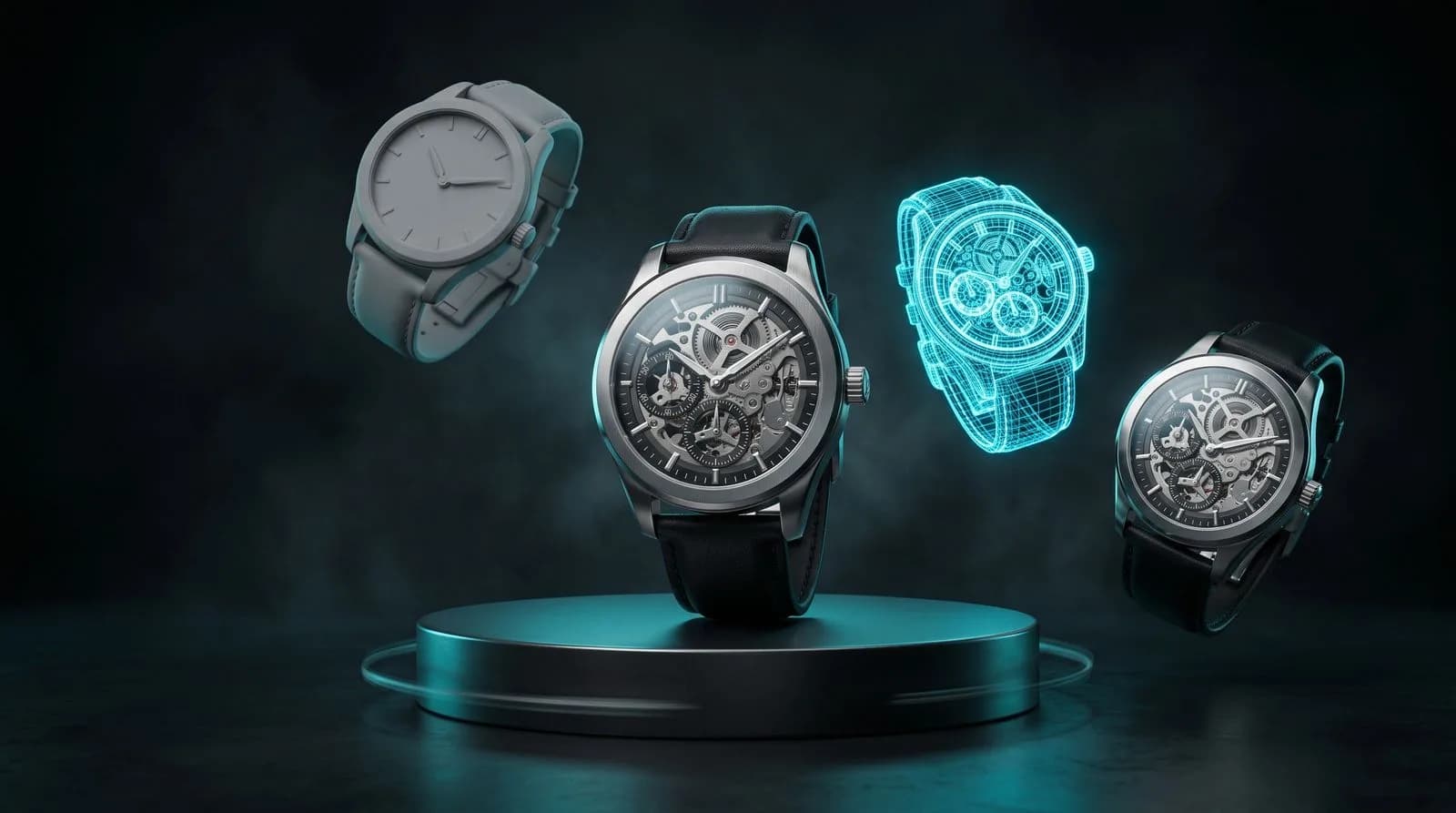
From the outside, a CGI product film can look like a single step: a product appears, lights sweep, liquids splash. Behind the scenes there is a step-by-step production process that takes no less discipline than a live shoot. This piece walks through it from the brand's side: what we ask you for, what you approve and when, and what you get at the end.
Brief and pre-production
Every job starts with a clear brief: the film's purpose, target channel, length, format and the brand's visual world. At this stage we gather reference work, build a moodboard and settle the tone of the film. The order is deliberate: in CGI, the most expensive mistake is the one noticed late.
On the product side, the most valuable material comes from the brand: the product itself or clear photos of it, packaging files, brand colours and any visuals produced before. The more complete these are, the more faithful the on-screen product will be.
What we ask you for
- Product and packaging: a physical sample or measured photos; the packaging artwork.
- Brand guidelines: colours, typefaces, logo rules.
- References: two or three examples you like and a couple you don't; the second list is often more useful.
- Channel list: where the film will run, in which lengths and aspect ratios.
- The decision maker: who approves, and on which days. A single point of contact saves weeks.
What you approve, and when
There are three approval points. First, the idea and frame plan: you see the flow of the film and its key frames as stills. Second, the first moving draft: camera movement, pace and length are settled here, and this is where big changes are discussed. Third, the final check before delivery: colour, sound and finishing touches. Followed in this order, the surprise is resolved in week one, not in the last frame.
Structural changes after approval are always possible, but they land on the schedule and budget as new work. Knowing that from the start makes life easier on both sides. What else sets the schedule is covered in how long a CGI ad takes.
Delivery is not a single file
The same film is delivered as a 16:9 master, 9:16 for Reels and TikTok, 1:1 for the feed and, where needed, large-screen formats, in several lengths. In a well-planned process these variations are designed in from the start; formats left to the end always cause trouble. Silent and subtitled versions and stills belong in the package from day one.
An example from Clytech
The CGI product film we made for Nutella Go follows this flow: product, light and movement decisions moved through the approval points above, and the film was delivered from one idea in several lengths and ratios. For more, see our CGI advertising examples.
PROJECT VIDEO
Timeline
The overall schedule depends on complexity, but three to six weeks is a realistic range for a typical product film. At Clytech we run the process with weekly approval points, so the brand knows what it will see at every stage. That is the real strength of CGI: control. In a well-built process there is no room for accident; every frame is designed. To talk about your project, write to us via the contact page; we reply to briefs within 24 hours.