
01ARTICLE
Published on
Should your next campaign be CGI, FOOH, AI or 3D product animation? The goal decides, not the format: CGI and 3D lead when the product has to look exactly right, FOOH leads when you want an illusion people talk about in a familiar street, and AI leads when you need fast exploration and many variations. This guide to choosing between CGI vs FOOH vs AI works through four questions — goal, assets, channel and way of working — and illustrates each format with real work from our services.
What do the four formats mean, in one sentence each?
- CGI ad film: the shots a camera alone cannot capture, produced through 3D modelling, animation and rendering. On most of our projects the base is real footage shot by our own team, and the product, the location or the idea is built on top of it. More: CGI ad film production.
- FOOH: a social video built on real city footage, with giant products, objects or scenes added in CGI that are not really there. More: FOOH ad production.
- 3D product animation: the product is built from a 3D model, with light and materials under full control from start to finish. More: 3D product animation.
What is your goal? A decision table
The fastest way to narrow the field is to write, in one sentence, what the campaign is going live for. The table below maps common briefs onto formats — there is no single right answer, only a centre of gravity.
| Goal | Format that leads | Why |
|---|---|---|
| Being talked about on social, organic sharing | FOOH | A familiar place at an unexpected scale; the idea is built to be shared from the first sketch. |
| Showing the product exactly as it is: e-commerce, catalogue, shelf | 3D product animation | Light, materials and camera are fully controlled; a packaging change is a material update, not a reshoot. |
| Creating scale and curiosity at launch | CGI or FOOH | A giant product on a city landmark, or a scene a camera could never stage. |
| Seasonal, special-day and multi-version social content | AI | Concepts and variations are explored fast, then the chosen direction is finished with CGI and editing. |
What do you already have? Assets change the answer
The same goal leads to different formats depending on where you start. Writing down these four points settles half the discussion before it begins.
- If you only have product photography: depending on the project the product comes from your photos, our own shoot, a 3D model or AI; in every case the benchmark is that the label, logo and shape stay true to the real product.
- If a location shoot is possible: FOOH and hybrid CGI stay on the table.
- If all you have is an idea: AI previsualisation makes the direction visible quickly, and the approved direction is then produced in CGI.
Which channel? Vertical, horizontal and in-store screens
Format cannot be decided separately from the channel, because framing is set at the very start of production. All four formats can be delivered as:
- TV and online commercials (horizontal)
- Vertical cuts for social: Reels, TikTok, Shorts
- FOOH: giant product illusions in real city footage
- 3D product animation and launch films
- Versions for DOOH and in-store screens
If one campaign needs both a vertical and a horizontal cut, say so at the briefing stage: framing, movement and product placement are planned around it.
Using two formats at once
In practice, few projects are pure. If your decision is only between AI and CGI, AI or CGI compares the two routes in detail; if the question is live action versus CGI, read CGI or live action. And before you write the brief, our list of ten questions makes the conversation shorter.
Examples from Clytech
Clytech is a CGI, FOOH and AI advertising studio based in Istanbul and London, and we have worked with 85+ brands in more than 15 countries. The four projects below show, in the plainest way, what each format does.
CGI — Nutella Go. In the vertical Nutella Go CGI film, digitally built scenes merge with real footage and the product is presented in a bold, cinematic style. The film passed 18 million views. When the product itself is the hero, this is exactly what CGI is for.
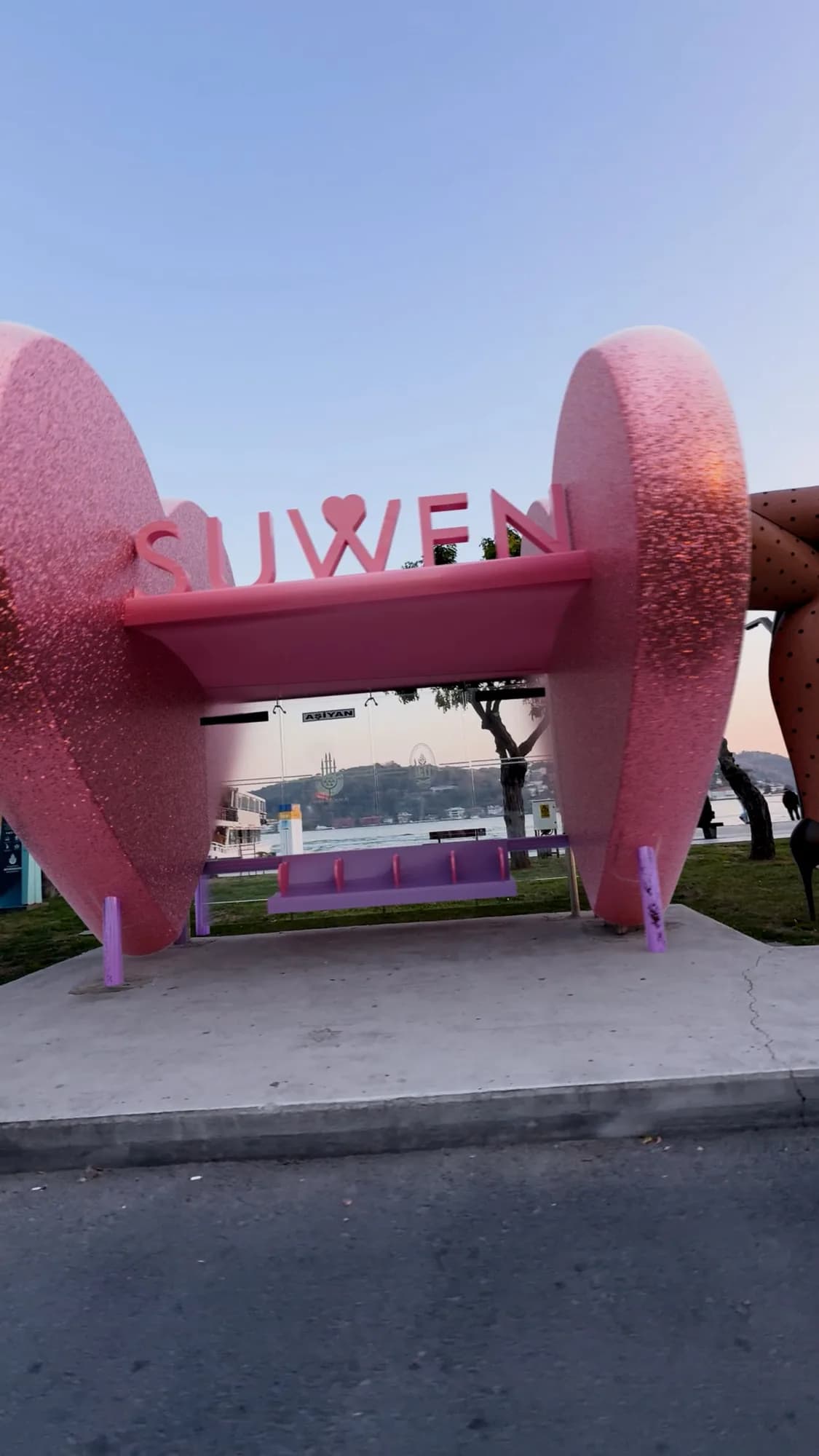
FOOH — SUWEN bus stop. In the film we produced for Suwen, an ordinary bus stop becomes a brand showcase; a digital installation sitting inside real street footage puts the collection on display at city scale. The vertical format was chosen for the social feed, and the film passed 58 million views.
PROJECT VIDEO
3D product animation — Reis Kuyumculuk. The 3D animation we made for Reis Kuyumculuk rebuilds the relationship between jewellery and light in a digital environment, with reflections across gold and stone surfaces handled through meticulous CGI material work. When macro detail is not negotiable, 3D hands you full control.
When a campaign spans several regions, the format decision also covers how well it scales: we produced PUBG Mobile's campaign for the Republic's 100th anniversary across six regions — İzmir, Ankara, Mardin, the Black Sea region, Antalya and Istanbul — and it passed 30 million views.
Frequently asked questions
Is there a shoot in CGI and FOOH projects?
On most of them, yes: real footage shot by our team is the base the CGI is built on. Some product films are built from 3D models from start to finish.
Can we change format after the project starts?
At concept stage, yes; later it costs more, because framing, product source and delivery formats are all set up around the chosen route. That is why clarifying the goal and the channel in the brief is the cheapest decision you will make.
Do you guarantee that one format will get more views?
No; nobody can honestly promise that. What we deliver is an idea designed to be shared and a believable production. We show our results with the platforms' own counters.
The most practical way to choose a format is to write your goal and your channel in two sentences and put them in front of a production team. Share your brief and we will come back within 24 hours with a recommendation — CGI, FOOH, AI or 3D — and the reasoning behind it. If you would rather look at the work first, our studio presentation gathers examples of all four formats in one place.