
01ARTICLE
Published on
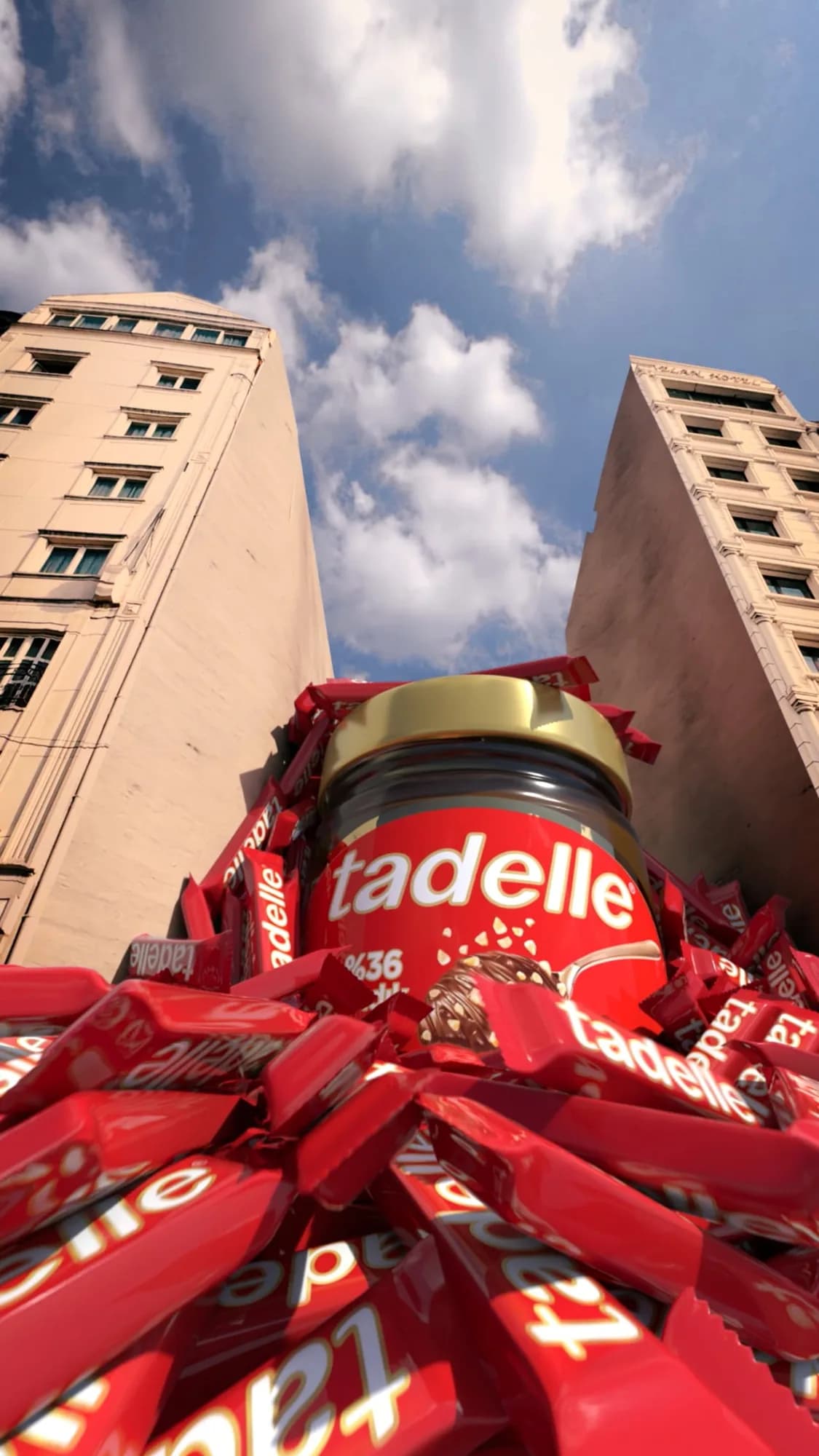
A CGI product ad is a short film that shows the product, or the scene around it, through computer-generated imagery. Brands use it in six main formats: the hero product film, the product-world scene, the vertical social film, the billboard breakout, the giant product in the city, and e-commerce visuals with short loops. Which one fits depends on what the product needs to show and where the film will be watched.
Below, each format opens with a question: what it does, which products it suits and where it lives. The examples are all live Clytech projects. If you want to talk about the production side of a product film, our CGI ad production page is the place to start.
When is a CGI product ad the right choice?
CGI is the right choice when you need to show something about the product that a camera alone can't capture. The product can grow to the size of a building, break out of a billboard, spin at the centre of its own world, or be shown up close, label and all, down to the finest detail.
In practice, CGI product ads earn their place when:
- The product's shape, texture or packaging is the main reason people buy it.
- You will need vertical, horizontal and short versions of the same film.
- You want to keep using the film after a packaging or colour change.
- You need a scene that stops the scroll in the first second and stays in memory.
In a CGI product film, a packaging or colour change doesn't mean a reshoot; the product's surface is simply updated. That keeps the film useful for a long time, especially for seasonal products and ranges with many variants.
Which format fits which goal?
The goal and the channel decide the format. The table below compares all six at a glance.
| Format | Best for | Typical products | Main channel |
|---|---|---|---|
| Hero product film | Showing shape and quality | Fragrance, electronics, jewellery, beauty | Website, e-commerce, launch |
| Product-world scene | Taste, feeling or brand mood | Food, drinks, chocolate | Social, digital ads |
| Vertical social film | Stopping the scroll, telling it fast | FMCG, snacks | Reels, TikTok, Shorts |
| Billboard breakout | Getting talked about and shared | Fragrance, drinks, fashion | Social (FOOH) |
| Giant product in the city | Launches, tying the brand to a place | Any category | Social (FOOH) |
| E-commerce visuals and loops | Conversion on the product page | Ranges with many variants | Product pages, catalogues, marketplaces |
How do the six formats work?
Each format answers a different question. Here is what each one does and which products it suits, in order.
1. What is a hero product film?
A hero product film puts a single product on a clean stage and lets light and camera movement do the talking. The aim is to bring the viewer close to the product's shape, surface and quality. You'll see it on launch pages, at the top of product pages and on in-store screens.
Its strength is focus: nothing else competes with the product. If your design speaks for itself, this is the cleanest place to begin. For a fuller picture of the format, read our piece on what 3D product animation is and where it works best.
2. How does a product-world scene work?
Here the product appears inside its own atmosphere: flowing richness for chocolate, a sense of cold for a drink, texture for skincare. The viewer doesn't just see the product, they understand how it feels. It is especially strong for food and drink brands, where appetite appeal links straight to sales.
The idea matters most. The scene has to match the product's personality; otherwise people remember a beautiful image and forget the brand.
3. Why should a vertical social film be planned on its own?
A vertical film fills a phone screen and is judged in the first second, so it should be built as a vertical film from the start rather than cut down from a horizontal one. The product needs to sit large and central in the frame, and the message has to land in the first few seconds.
If you need both vertical and horizontal versions of the same product film, planning both from day one keeps each framing natural.
4. The billboard breakout and 5. the giant product in the city
Both formats belong to the FOOH (fake out-of-home) family: the product appears in real city footage at a scale, or doing something, that isn't really there. A billboard breakout shatters a familiar ad space; a giant product turns a bus stop, a square or a landmark into a stage. Both are designed to be watched and shared on social media.
They work particularly well for launches. We cover the launch angle in our guide to FOOH formats for product launches, and the production side on our FOOH ad production page.
6. When do you need e-commerce visuals and loops?
On a product page, sales come from sharp images and short loops more than from a full film. Still images, a few seconds of the product turning, and colour variants produced from the same product world carry the film's look into e-commerce.
This item is usually more efficient when it's planned alongside the film. We break down what drives the budget in our piece on CGI product image cost.
Examples from Clytech
Clytech is a CGI, FOOH and AI advertising studio based in Istanbul and London. These projects are real-world versions of the formats above.
Scentlinq, hero product film. Our 3D product animation for Scentlinq stages the product with cinematic detail. Lighting and camera moves were built around the product's form, giving the brand a striking film for its digital channels.
Tadelle, product world. Tadelle's chocolate film brings the brand's iconic chocolate to the screen with bold, cinematic visuals, built vertically for social platforms. It is part of the same campaign as the World Red Dress Day metro film, and the campaign passed 45M+ views in total.
PROJECT VIDEO
Nutella Go, vertical social film. The Nutella Go film meets the audience where imagination and reality cross paths, presenting the product in a bold, cinematic way. The 9:16 format makes it feel at home in a social feed. The Nutella &GO work passed 18M+ views.
MAD Parfum, billboard breakout. In the MAD Parfum film, a giant perfume bottle smashes through a city billboard. The FOOH illusion turns conventional outdoor advertising into a brand moment designed to spark conversation online.
PROJECT VIDEO
The best-known example of the giant-product format is the SUWEN bus stop film, which turned a bus stop into the brand's shop window and passed 58M+ views.
What should you ask before choosing a format?
The quickest way to the right format is to answer these questions before you write the brief:
- Which single quality of the product should the film show?
- Where will it mostly be watched: in a feed, on a product page or on an in-store screen?
- How many versions do you need: vertical, horizontal, short cuts?
- Is the packaging or colour about to change?
- Will you also need e-commerce visuals from the same look?
The answers usually point to the format on their own. If you're torn between two, you can combine them: for example, a hero product film plus a short FOOH version where the same product appears giant in the city.
Frequently asked questions
Is a CGI product ad the same as 3D product animation?
They're close, but not the same. 3D product animation usually shows the product on a clean stage; a CGI product ad is the wider frame that places the product inside an idea, a location or real city footage. See our 3D product animation page for more.
Can you make a CGI product ad if we don't have a 3D model?
Yes. Depending on the project, the product is built from your photos, our own shoot or your design files. In every case, the benchmark is a label, logo and shape that are true to the real product.
Can one film give us several formats?
On most projects, yes. Planned up front, vertical and horizontal films, short cuts and e-commerce visuals can all come from the same product world.
Which format gets the most views?
Nobody can honestly say in advance. Views come from the strength of the idea, the opening seconds and the media plan; the format simply makes sure the idea shows up in the right place.
The bottom line
In CGI product advertising, the right format starts with what the product needs to show. A hero film for shape, a product world for feeling, FOOH for conversation, visuals and loops for the product page. Let's work out which one fits your product: send us your brief and we'll reply within 24 hours. If you'd like to see our work first, take a look at our company presentation.