
01ARTICLE
Published on
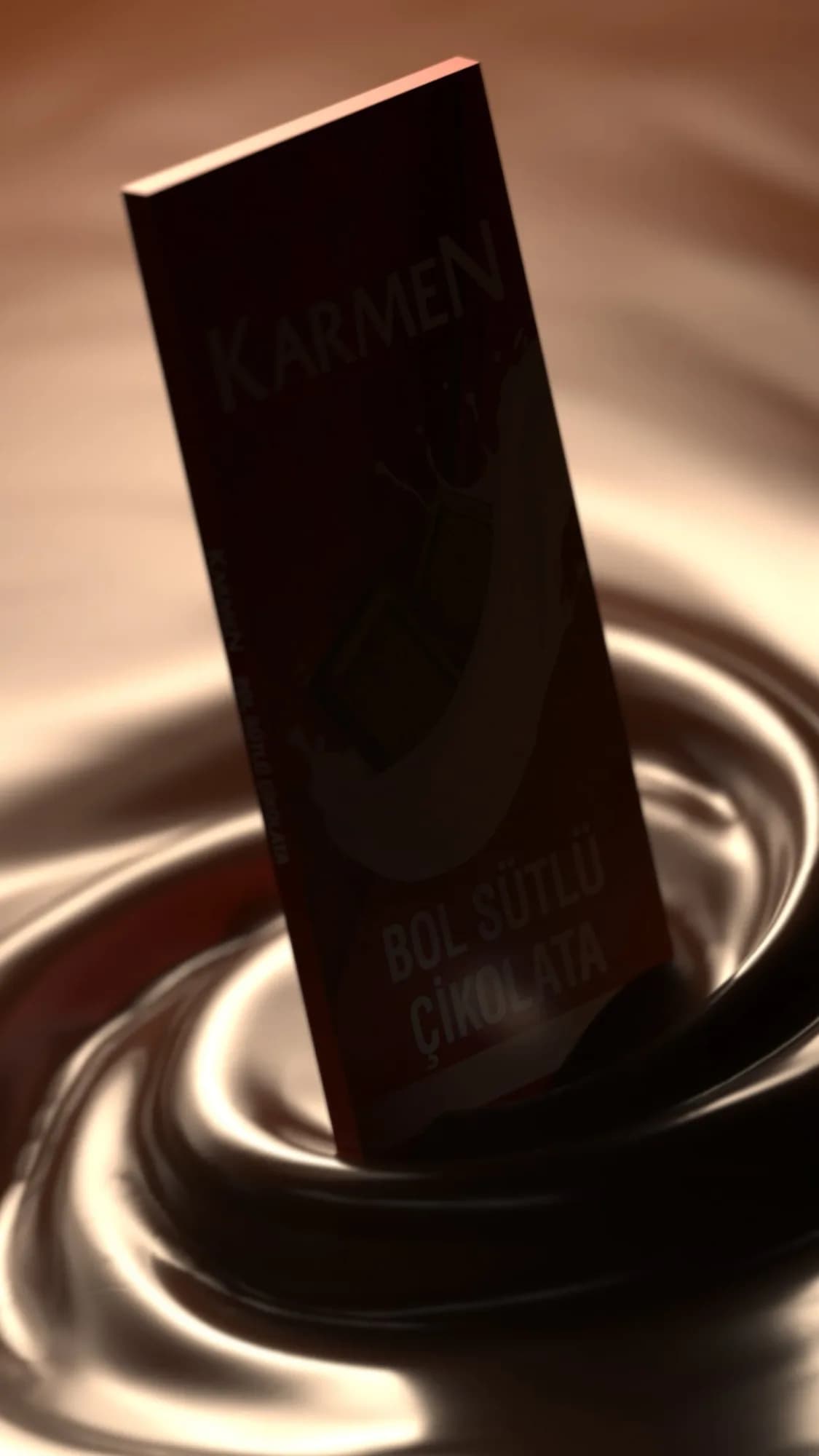
3D product animation is a product film built entirely in 3D: the product is modelled in a computer and staged with lighting, materials and camera work. The point is not to make the product look like something it isn't, but to show it at a distance and with a control a camera can't reach — the moment chocolate breaks, the reflection travelling across gold, light passing through a glass bottle.
This piece answers three questions: what 3D product animation is, which products it suits, and where the finished film is used. The process and the budget conversation live on our 3D product animation page; what follows is the part you need while you are still deciding.
How is a 3D product animation made?
Production starts by building a digital copy of the product, and the whole scene is then constructed in the same environment:
In short: idea and approval, a shoot if needed, CGI production, edit and delivery. You sign off at every stage.
For what the brand approves at each stage and how the schedule moves, see how a CGI product film gets made.
Is 3D product animation the same as a CGI ad film?
Not the same, but related. In 3D product animation both the product and the scene are built digitally; in a CGI ad film the digital element is usually placed on top of real footage our team shoots. The difference in one table:
| Method | How the image is built | When to choose it |
|---|---|---|
| 3D product animation | Product, scene and lighting are built in 3D | The product is the hero; detail, texture or inner structure has to be shown |
| CGI ad film | 3D elements are added to real footage | The product appears in a real place, among real people |
| 2D and motion graphics | The story is carried by graphics and typography | A message, a campaign mechanic or data has to be explained |
For a fuller comparison of the formats, see animated ad film types.
Which products does it suit?
3D product animation earns its place where a camera struggles. In practice these categories reach for it most often:
- Food and confectionery: melting, breaking and flowing moments are hard to catch repeatedly on set; in 3D the same moment can be repeated as often as needed.
- Jewellery and watches: metal and stone are read through reflection and brilliance, so material work decides the result.
- Fragrance and cosmetics: glass, liquid and label meet in one frame, and the light travelling through the bottle is built deliberately.
- Packaged goods: when packaging changes or a new variant launches, the scene can be updated instead of rebuilt.
- Technology and devices: the inside of a product, its layers and how it works can be shown in an exploded view. For how formats are chosen for phone, audio and smart device launches, see CGI for tech product launches.
- Home and building products: for products whose workings are invisible, such as heating systems, the internal structure can be simplified and shown.
When is a live shoot stronger?
When the story is about people rather than the product itself, filming wins: performance, expression, everyday use and the atmosphere of a place come out more naturally on camera. For many campaigns the most efficient route is a mix — hero scenes on camera, close-up product shots in 3D. That decision is weighed in detail in CGI or live action?
Where is the finished animation used?
- E-commerce: a short turning or opening film on the product page gives scale and detail a photograph can't. Short product films for retail, e-commerce and social are covered separately in our product video production guide.
- Launch: communication can start before the product reaches the shelf.
- Social media: vertical, square and horizontal versions come out of the same scene.
- Retail and digital screens: silent, loop-friendly edits are cut for screens watched without sound.
- Sales and trade-show decks: an animation of the product's inner workings becomes a tool for the sales team.
Examples from Clytech
Clytech is a CGI, FOOH and AI advertising studio based in Istanbul and London, and we produce 3D product animation across categories from food to jewellery. These three projects show how the same method behaves with different product types.
Şok Marketler — Karmen chocolate: Karmen chocolate was brought to life entirely in 3D for this project. Its texture, flow and appetising details were rebuilt in CGI, and careful lighting and material work gave the chocolate a level of realism that would be hard to capture in front of a camera. The film was delivered in vertical format.
PROJECT VIDEO
Reis Kuyumculuk: this 3D animation for Reis Kuyumculuk rebuilds the relationship between jewellery and light in a digital environment. Reflections and brilliance across gold and stone surfaces were handled with meticulous CGI material work, and the result is a controlled presentation that shows the pieces from their most flattering angles.
PROJECT VIDEO
Scentlinq: in the 3D product animation produced for Scentlinq, lighting, materials and camera moves were all built around the product's form, resulting in a horizontal product film the brand can use across its digital channels.
Frequently asked questions
We don't have a 3D model of our product. Can it still be done?
Yes. Which files you already hold is one of the first things to settle in the brief.
How long does a 3D product animation take?
The schedule depends less on the length of the film than on the source of the model, demanding materials such as glass, metal and liquid, whether simulation is needed, the number of versions and formats, and how approval rounds are organised. We share a firm timeline once we have seen the brief.
What decides the price?
We gathered the items that shape the budget in a separate piece: what decides the price of a 3D product animation?
How many formats come out of one animation?
Because the scene is built once, vertical, square and horizontal versions can be cut from the same production. Naming the channels you need in the brief lets framing be planned correctly from the start.
If the packaging changes, does the film have to be remade?
Usually not. The scene and animation can stay in place while the label, colour or packaging is updated and re-rendered. Flagging that possibility early means the files are built to allow it.
If you want to talk through whether 3D animation is the right method for your product, describe the product and how the film will be used — launch, e-commerce, advertising — and send it to us; we reply to briefs within 24 hours. For what to settle before writing that brief, see our 3D product animation brief guide.