
01ARTICLE
Published on
CGI product image cost depends far less on the number of images than on seven factors: where the product comes from, how many products and variants there are, how many scenes are needed, how demanding the materials are, where the images will be used and in which formats, how revisions run, and whether the same product will also be animated. That is why two brands asking for the same number of images can end up with very different budgets. We confirm an exact price once these factors are clear in the brief.
This piece is for brands planning product images for e-commerce, catalogues and campaigns who want to read quotes with more confidence. We explain the different ways to produce product images on our AI product visualisation page, and we covered the choice between CGI and AI in AI product photography or CGI product images. Here we focus only on the budget.
What decides the cost of a CGI product image?
The real question behind the price of a CGI product image is how accurately the product has to appear, in how many versions and in how many scenes. The number of images is the result of those answers, not the cause. The table below shows what pushes the budget up and what keeps it in balance for each factor.
| Factor | Raises the budget | Keeps it in balance |
|---|---|---|
| Product source | Building the product from scratch, missing references | An existing 3D model or clear product photos |
| Products and variants | A separate product for every colour and size | Colour and label changes on the same body |
| Number of scenes | A separate lifestyle scene for every image | Different angles within a shared scene |
| Materials | Glass, metal, liquid, transparent packaging | Matte surfaces, simple packaging |
| Use and formats | Reframing for each channel after the fact | Planning all formats together up front |
| Revisions | Unclear approvals, late changes | Defined revision rounds, one sign-off point |
| Animation alongside | Planning images and film separately | Producing both from the same product asset |
The 7 factors that shape the price
1. Where the product comes from
The source of the product is the biggest single factor. Depending on the job, it comes from the client's photos, from our own shoot, from a 3D model or from AI. If the brand already has an up-to-date 3D model or sharp photos from several angles, the work starts faster; if the product arrives as a single pack shot, the product itself has to be built accurately first.
2. Number of products and variants
Different colours, sizes or pack options of a product are each visualised in their own right. Variants that share the same body multiply far more efficiently than completely different products. Sending your product list grouped by body and variant makes the budget clear straight away.
3. Number of scenes and backgrounds
A product on a clean background and a lifestyle scene set in a kitchen, a bathroom or on a festive table don't take the same effort. Every new scene means new light, a new arrangement and a new approval. Producing different angles or close-ups within one scene is more economical than building a new scene for every image.
4. How demanding the materials are
Glass bottles, polished metal, transparent packs full of liquid or products where texture matters, such as chocolate, need more finesse than a matte box. Viewers spot small flaws on these surfaces instantly. The harder the material, the more time it takes to get the look right.
5. Where the images are used, and in which formats
A centred, white-background image for an e-commerce page, a vertical frame for social and a campaign visual that leaves room for copy don't come easily out of the same frame. If you know the channels from the start, the framing is planned together and nothing has to be produced again later.
6. How revisions run
The number of revision rounds and who gives approval quietly grow the budget more than anything else. If the product's look is approved early, the scenes that follow are built quickly on that approved base. A pack change that arrives at the end, on the other hand, reopens part of the work already done.
7. Producing images and animation together
If you are planning both an image set and a short product film for the same product, producing them together is more efficient than producing them separately. The product is built accurately once, and both the images and the film come from that shared asset. We cover the cost factors of product films separately in 3D product animation pricing.
Why can a price per image be misleading?
A price per image hides the one-off work, such as building the product and preparing the scene. The first image carries all of that work; later images from the same product and the same scene take far less effort. So multiplying the price of one image by the number of images rarely reflects the real cost.
When you compare quotes, these questions give a clearer picture:
- Is building the product shown as a separate line?
- Does it state the number of scenes and how many images each scene will produce?
- Are the formats and channels listed?
- Are the revision rounds defined?
- Is it clear what can be reused if you later want new images or an animation of the same product?
A brief checklist for getting the most from your budget
Nothing clarifies a budget more than a complete brief on day one. When you prepare a product image request, we suggest including:
- A product list grouped by body and variant.
- Existing product sources: a 3D model, product photos or the product itself.
- Current packaging and label details.
- The channels you will use and the format for each.
- Scene ideas or reference images.
- Who approves, and in what order.
- Whether you will need an animation of the same product.
The same list works for e-commerce visuals; we explain where AI shines and where its limits are in our guide to AI product visuals for e-commerce.
Examples from Clytech
Clytech is a CGI, FOOH and AI advertising studio based in Istanbul and London, with 150+ projects for 85+ brands. The pieces below are product films, but they show clearly how the factors above, especially product source, materials and number of scenes, shape a budget.
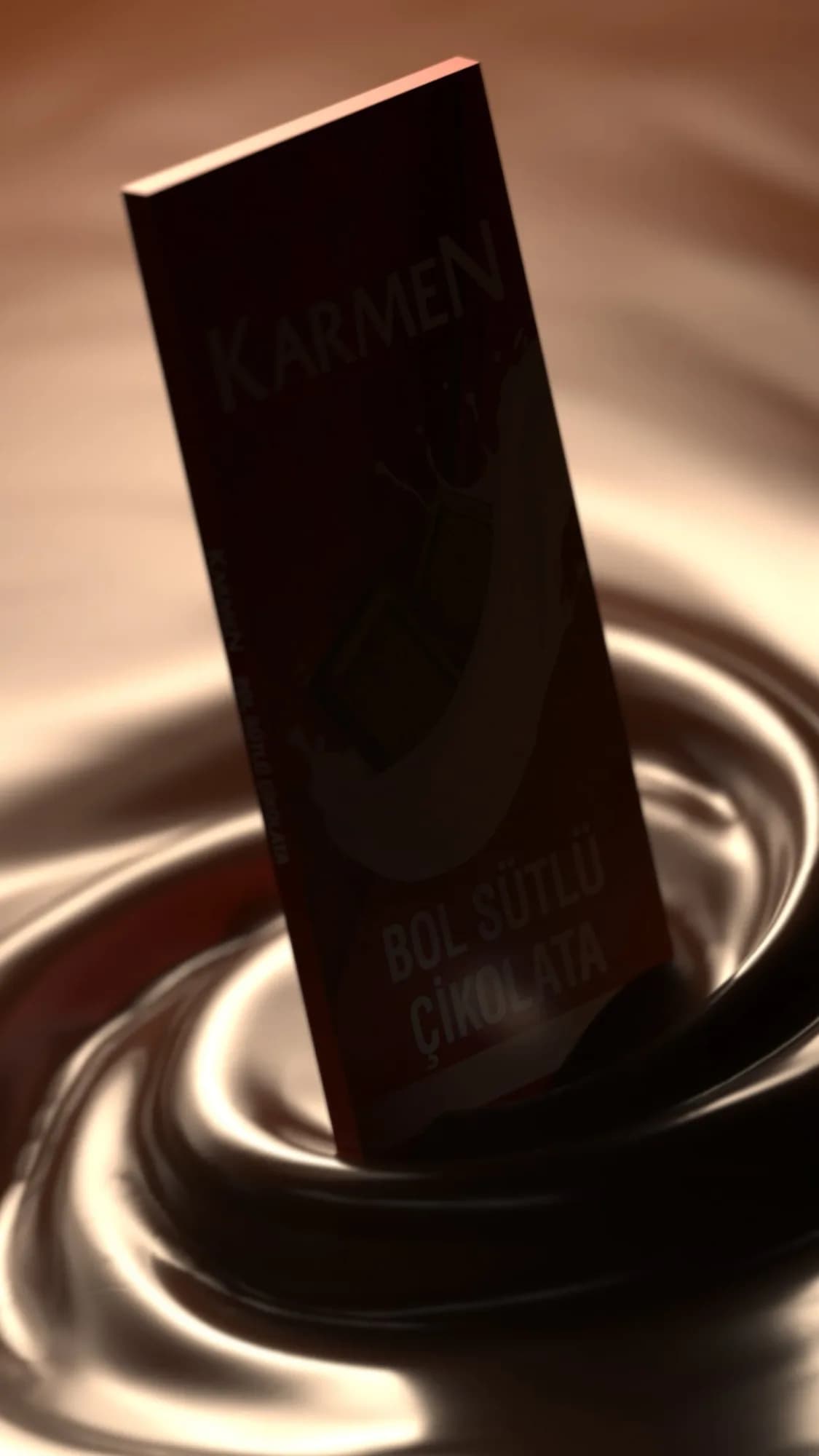
Şok Marketler, Karmen chocolate. The Karmen chocolate 3D film brings out the chocolate's texture, flow and appetising detail in a vertical (9:16) product film. It is a good example of why a product where texture matters needs extra care on the materials line.
PROJECT VIDEO
Paşabahçe, New Year campaign. In the Paşabahçe New Year campaign, the brand's glassware and tableware come together in scenes that capture the festive atmosphere. Carrying a demanding material like glass across several scenes shows how the scene and material factors work together.
PROJECT VIDEO
Larplast 3D animation film. Our 3D animation film for Larplast presents the brand's approach to design and precision in a horizontal (16:9) film. It turns a technical subject into a story that is easy to watch, a reminder that the storytelling needs planning in the budget as much as the product itself.
Frequently asked questions
Do I need to send the physical product for CGI product images?
Not always. A 3D model of the product or sharp photos from several angles are enough for most jobs; if texture or colour is critical, seeing the product itself improves accuracy.
Are AI product images cheaper than CGI?
It depends on the job. AI can lead where many scenes and quick variations are needed; CGI is the better choice when you need full control over the product's angle, material and movement. Often the two are used together in the same campaign.
What should I send to get a quote?
Your product list, the product sources you have, the channels you'll use and any reference images are enough. We reply to every brief within 24 hours.
Can the same images be turned into an animation later?
If the product was built accurately from the start, usually yes. That's why we suggest mentioning any chance of animation in the first brief.
Let's clarify your product image budget
The right budget for CGI product images comes from a clear definition of the product, the scenes and the channels, not from the number of images. Share your product and what you need through our contact page, and we'll suggest the most efficient route for your product source. If you also need a close-up product film, see our 3D product animation page, or browse our work in our company deck.