
01ARTICLE
Published on
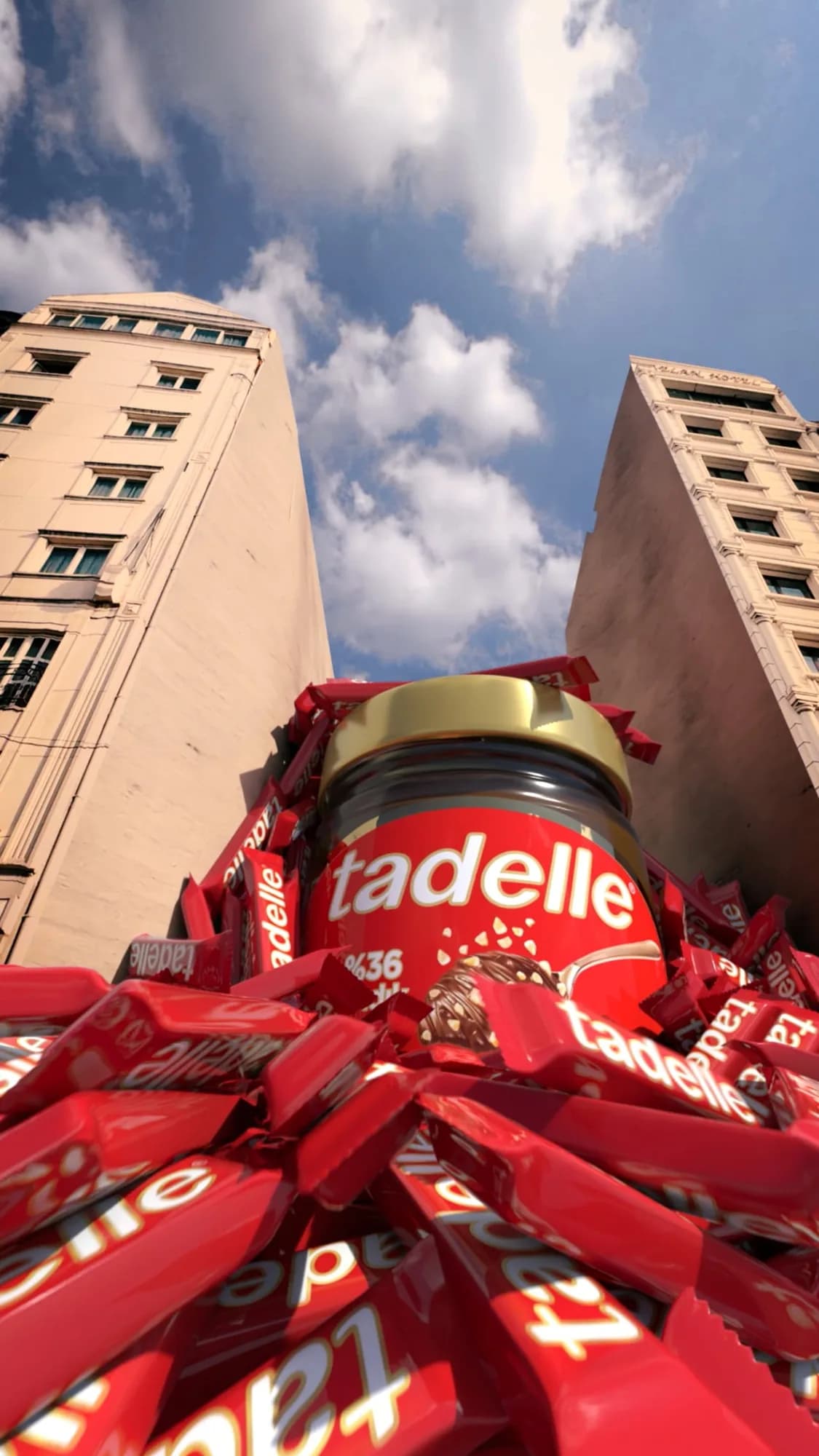
CGI for FMCG brands is a way to show a fast-moving consumer product, whether chocolate, snacks, drinks or personal care, with an accuracy a camera struggles to reach and in a scene that stops the scroll. CGI shows the packaging exactly as it is, stages appetite moments such as flowing chocolate or a fizzing drink under full control, and makes it easy to cut versions for different channels from one production. This piece covers where CGI works for FMCG, what it adds to product communication and what to put in your brief, using real campaigns. For the service itself, see our CGI ad film production page.
Where do FMCG brands use CGI most?
FMCG brands use CGI most where the product itself is the hero: product films, launches, seasonal campaigns and social content. What these have in common is that viewers need to recognise the product and want it within a few seconds.
- Product films: Short films where the pack, the logo and the product's texture read clearly. Vertical and horizontal versions run on social media, product pages and in-store screens.
- New product or new pack launches: The first appearance of a new flavour, a new size or a redesigned pack. Here, getting the product right matters more than the spectacle around it.
- Seasonal and special-day campaigns: Films that take the product into a familiar city moment for a holiday, New Year or a day the brand owns.
- Social content: Videos where the product appears at an unexpected scale or in an unexpected quantity in a real place, making viewers ask "is this real?"
- Retail screens: Product films for a retailer's own screens and digital channels. We cover this channel separately in video content for retail media networks.
Most of these uses live side by side in the same campaign. A launch film plays vertical on social, square on a product page and horizontal on an in-store screen. That is why, in FMCG, the decision to use CGI is usually made for a content package rather than a single film.
What does CGI add to FMCG product communication?
The biggest thing CGI brings to FMCG is control: the product looks right in every frame, appetising in every shot and consistent on every channel. In fast-moving consumer goods the product is small, the pack carries a lot of information and viewers glance at the screen for a moment. Put those three together and control over how the product looks becomes part of the sales message.
| Need | What CGI adds | Where it helps most |
|---|---|---|
| Product accuracy | Pack, logo, colour and shape stay the same in every frame. | Multi-product brands with strict brand guidelines |
| Appetite moments | Flowing chocolate, a snapping piece or a fizzing drink shown at the speed and angle you want. | Food and drink product films |
| Pack updates | A new pack goes into the film as an update rather than a reshoot. | Brands with seasonal packs or frequent redesigns |
| Multiple formats | Vertical, horizontal and square versions come from the same scene. | Campaigns planned across social, e-commerce and in-store screens |
| Scale and surprise | The product appears giant-sized or in an unexpected quantity in a real place. | Launches that need to get people talking on social |
For multi-product brands there is a further benefit: films for the same product family share one visual language. The differences in light and colour you get when flavours or sizes are filmed separately are settled from the start with a single look for the scene.
What happens to the film when the pack changes?
In CGI, a change to the pack or the product colour is a material update, not a reshoot. That matters for situations FMCG brands face all the time: a seasonal pack, a new flavour, a refreshed logo or a label that changes from market to market. The edit and the scene stay as they are, and the product is updated to its new look. Working from current, clean packaging files from day one makes those updates easier.
How do you build FMCG content for social media?
FMCG content that works on social rests on one strong image: a familiar moment and a product doing something unexpected in it. Viewers read the idea instantly because they know the product; the unexpected part is what stops the scroll.
- Pick a familiar moment. A metro platform, a kitchen counter, a city square: somewhere viewers know from their own day.
- Give the product one job. Pouring, growing, flowing or transforming. More than one idea in the same film splits attention.
- Let the brand colour fill the scene. When the pack's colour spreads into the scene itself, the brand is recognised before the logo appears.
- Show the product early. In fast feeds, having the product on screen in the opening moments carries the brand even to viewers who don't watch to the end.
- Think vertical. Build the scene for a phone screen and plan the horizontal version separately.
For more on openings, read our piece on the opening seconds of a social ad.
Examples from Clytech
Clytech is a CGI, FOOH and AI advertising studio based in Istanbul and London. Three of our projects for food brands show different ways CGI works in FMCG: a cinematic film for an iconic product, a city scene tied to a special day, and a product film built around texture.
Tadelle: an iconic chocolate and a metro scene
The Tadelle chocolate commercial presents the brand's familiar chocolate in a vertical format for social, with bold, cinematic visuals. Turning a well-known treat into a scroll-stopping moment, the film reached around 29 million views on its own.
PROJECT VIDEO
The second film in the same campaign is the World Red Dress Day metro film. The doors of a fully Tadelle-branded metro train open and thousands of chocolates spill onto the platform, turning an everyday city moment into an unexpected spectacle in the brand's signature red. The film reached around 16 million views, and the campaign passed 45 million in total. We tell the full story in Tadelle's CGI campaign.
Nutella Go: a product scene where imagination meets reality
The Nutella Go film presents the product in a scene where imagination and reality cross paths, in a bold, cinematic style. The vertical format makes it feel at home in a social feed. The film passed 18 million views.
PROJECT VIDEO
Karmen: a chocolate film built on texture and flow
Our Karmen chocolate film for Şok Marketler puts the product's texture, flow and appetising detail up front. Made in a vertical format, it makes the product the hero without needing anything else in the scene. For similar product-led work, see our 3D product animation page.
What should you put in the brief?
In an FMCG CGI brief, the most important information is the product: the current pack and the brand's answer to "how should our product look?" A short checklist:
- Product and packaging files: The current pack design, logo and colour codes, plus technical drawings or photos of the product if you have them.
- Product rules: The angles the product should be shown from, what the inside or filling looks like, and anything that must not be shown.
- Goal and channels: A launch, a special day or ongoing product communication; whether the film will run on social, on product pages or on in-store screens.
- Formats and versions: Vertical, horizontal, square, and whether separate versions are needed for different flavours or packs.
- Timeline: The campaign date and the approval points along the way.
- References: Work you like and work you want to avoid.
We walk through the path from brief to delivery from the brand's side in how a CGI product film gets made. In short, the work moves through idea and sign-off, a shoot if needed, production, editing and delivery.
Frequently asked questions
Should I choose CGI or live action for an FMCG product?
CGI leads when the product must look exactly right, when the appetite moment needs full control, or when the product needs to be in a scene that couldn't happen for real. Live action is stronger when you need a human story and performance, and most projects combine the two. There is more in CGI or live action.
Can one production deliver films for different channels?
Yes. If we set the formats during planning, the same scene can deliver vertical, horizontal and square versions for social, e-commerce and in-store screens.
Does CGI suit restaurant and delivery brands too?
It does, but the needs are different: for restaurants, menu launches and the appetite moments of hot food take the lead. We cover that in CGI ad films for restaurant and fast-food brands.
Does CGI work for personal care and household products?
Yes. Details such as the texture of a cream, the movement of foam or the shape of a bottle come through clearly in CGI. Any scene about what the product does stays within the message the brand has approved.
What should I send for a quote?
A short brief covering your goal, channels, product information and timeline is enough. We reply within 24 hours with a proposed approach.
In FMCG, CGI is a controlled way to show the product with the same accuracy on every channel, in a scene that stops the scroll. Get in touch with your product, campaign date and channels, or start with our company deck, and we'll work out the right format together.