
01ARTICLE
Published on
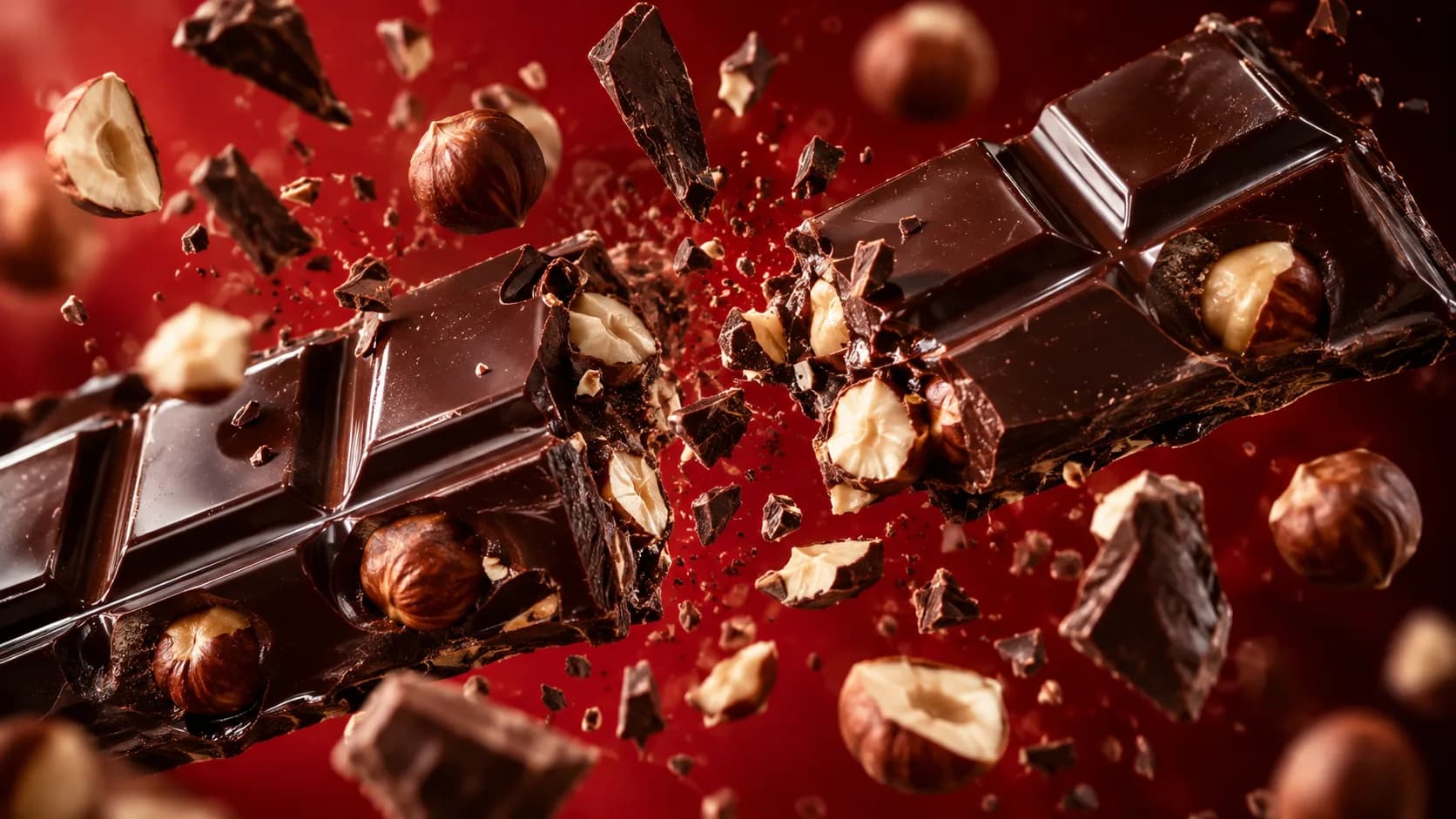
The Tadelle CGI campaign is made up of two vertical CGI films that Clytech produced for Tadelle: a chocolate commercial that presents the brand's iconic chocolate in a cinematic way, and a World Red Dress Day film in which thousands of chocolates pour out of a branded metro train. The campaign passed 45 million views in total, with around 29 million coming from the chocolate film and around 16 million from the metro film.
Below we look at the idea and format of each film, how the two work together and what other brands can take from the campaign. If you want to see how a CGI commercial is made and which formats we deliver, our CGI commercial production page covers the process in detail.
How do the two films differ?
The two films give the same brand two different jobs: the chocolate commercial puts the product itself at the centre, while the metro film turns an everyday city moment into an unexpected spectacle in the brand's signature red. The table sets them side by side.
| At a glance | Chocolate commercial | Metro film |
|---|---|---|
| Idea | The iconic chocolate, presented with bold, cinematic visuals | The doors of a fully branded metro train open and thousands of chocolates spill onto the platform |
| Job | Turn a familiar treat into a scroll-stopping moment | Create a surreal moment people talk about and share |
| Service type | CGI, commercial film | CGI, FOOH |
| Format | Vertical (9:16), social media | Vertical (9:16), social media |
| Views | Around 29 million | Around 16 million |
Because both films belong to the same campaign, the result should be read as one: over 45 million views in total. Rather than crediting the number to a single film, it is more useful to look at how the two films split the work.
How did CGI and real footage come together?
In the chocolate commercial, real footage is combined with CGI produced at the Clytech studio. It is a balance we reach for often with food brands: the texture and light a camera captures share the frame with the control and scale that CGI provides.
On a product film like this, the work usually runs through these steps:
- 3D product model and materials: The product and its packaging are modelled exactly, with the gloss, texture and colour of each surface tuned separately.
- Vertical edit: The film is planned for 9:16 social feeds from the start, with the opening seconds given to the product's strongest shot.
The metro film is listed as a CGI and FOOH piece. FOOH is a social video in which objects or scenes that aren't really there are added to real city footage with CGI; here, that element is the flood of chocolates spilling from the train doors onto the platform.
Something unexpected in a familiar place is where CGI is strongest. Viewers know the metro, the platform and the doors, so they don't question the rest of the scene and their attention goes straight to the chocolates. Believability then lives in the detail: the way objects fall, collide, pile up and catch the light has to obey real-world physics.
Why did it work?
The campaign passed 45 million views in total. No result comes down to a single cause, but as the team that made it, we would point to five decisions:
- A familiar product: Instead of introducing something new, the film scales up a taste viewers already know.
- A colour that becomes the idea: In the metro film, the brand's red stops being a logo colour and becomes the scene itself.
- A natural link to the calendar: The metro film was made for World Red Dress Day, so the name of the day and the colour of the brand meet in the same idea.
- An everyday moment, broken: Metro doors opening is a moment everyone knows. Thousands of chocolates pouring out turns it surreal in a second.
- Built for the feed: Both films were produced vertically for social media, so they fill the phone screen without anyone turning it.
Many of these decisions come up again and again in widely watched CGI work; we collected the recurring patterns in what viral CGI campaigns share.
What can other brands learn from the campaign?
The most transferable lesson is the structure: instead of loading every job onto one film, the campaign shares the jobs out. When you plan your own, ask yourself:
- Which is your product film? A film that shows the product at its best, controlled and cinematic, is the backbone of the campaign.
- What is your talking point? A second film that breaks an everyday scene with a single image gives people a reason to share.
- Which day is yours? Look for dates in the calendar with a natural link to your colour, product or story.
- Can your colour become an idea? A brand colour doesn't have to stay in the logo; it can be the scene.
- How will you measure success? Judge the films of one campaign together, since each has a different job.
When you brief a two-film campaign, write each film's job down separately: which one shows the product, and which one creates the talking point? Then decide what ties them together, whether a colour, a product or a visual attitude, and agree the release order and channels so the films can support each other.
To see which decisions took a single CGI film to a very large audience, read our write-up of the SUWEN bus stop case. To see Tadelle alongside other CGI campaigns from the country, take a look at our guide to CGI advertising in Turkey.
Examples from Clytech
Tadelle chocolate CGI commercial. Tadelle's iconic chocolate takes centre stage in this commercial, rendered with bold, cinematic visuals. Edited vertically for social platforms, the film combines real footage with CGI produced at the Clytech studio and reached around 29 million views on its own.
PROJECT VIDEO
Tadelle World Red Dress Day metro CGI film. Made for World Red Dress Day, this film opens the doors of a fully Tadelle-branded metro train and lets thousands of chocolates spill onto the platform. Produced vertically for social media, it reached around 16 million views, taking the campaign past 45 million views in total.
PROJECT VIDEO
Clytech is a CGI, FOOH and AI advertising studio based in Istanbul and London. We have delivered 150+ projects for 85+ brands in 15+ countries, and our work has passed 500 million views in total.
Frequently asked questions
How many views did the Tadelle campaign get?
Over 45 million in total: around 29 million for the chocolate commercial and around 16 million for the World Red Dress Day metro film.
Which films make up the campaign?
Two films: a chocolate commercial that presents the iconic chocolate cinematically, and a metro film in which thousands of chocolates pour out of a branded train. Both were produced in vertical format for social media.
How was the chocolate commercial made?
Real footage is combined with CGI produced at the Clytech studio, and the film was edited vertically for social platforms.
Why use CGI for a chocolate brand?
Control. The product's shape, packaging and colour have to be exactly right on screen, and CGI lets you manage that frame by frame. In CGI, a packaging or colour change is a material update, not a reshoot. We look at where CGI helps other food and fast-moving consumer goods in CGI for FMCG brands.
How do you tie a CGI campaign to a special day?
Find the day's natural link to your brand first, through a colour, a product or a story, then boil the idea down to one image. Talk about timing early: the complexity of the idea and approval rounds set the schedule, and we confirm it once we have seen the brief.
Let's plan your campaign together
A good campaign doesn't load every job onto one film; it gives the product film and the talking point separate roles. To talk through a similar structure for your brand, send us your brief and we'll come back within 24 hours with an approach. You can also browse our work in our company presentation.