
01ARTICLE
Published on
CGI for beverage brands is about telling the refreshment of a bottle, a can or a glass in a short film: droplets on an ice-cold surface, foam rising as the cap comes off, a summer or table-side atmosphere built around the product. With drinks, viewers see the product before they taste it; the film's job is to spark that first-sip feeling on screen. This guide covers the decisions specific to the beverage category, with examples from our CGI ad film production work.
Why is CGI used so often in beverage advertising?
Because the strongest moments in a drinks film are the hardest ones to catch on camera. A droplet hanging in the air, an ice cube cracking at exactly the right moment, condensation running down a bottle without hiding the label, bubbles rising from a can: CGI makes it possible to show all of this in the light and at the speed you want. Brands also want the packaging and label to look exactly right in every frame.
The second reason is atmosphere. A drink is usually remembered together with a place: the seaside, an iftar table, a busy table of friends, a hot afternoon. CGI makes it possible to place the product inside that atmosphere or to rebuild the atmosphere completely. We covered the wider role of CGI for food and fast-moving consumer goods in CGI for FMCG brands; this guide is only about the decisions specific to drinks.
How is refreshment built on screen?
Refreshment is built from a set of visual cues, and each cue can carry a film on its own. These are the cues used most often in beverage films:
- Cold: Condensation and running droplets on the bottle or can, the shine of ice.
- Movement: The cap opening, the pour, ice dropping into a glass, rising bubbles.
- Colour: The drink's own colour and the natural colours around it: fruit, leaves, sea, sky.
- Sound: The click of the cap, the clink of ice, the fizz of foam; a strong cue for people watching with sound on social media.
- Atmosphere: The moment and place the drink belongs to: summer, the table, a celebration or an everyday break.
A good drinks film does not use every cue; it picks one or two and shows them clearly. One strong moment stays with viewers longer than five moments in a row.
Why packaging and label accuracy is critical
The drinks aisle is a competition of colours and bottle shapes. Shoppers recognise a brand by the colour of the cap, the silhouette of the bottle and the layout of the label. That is why the packaging in the film is built exactly from the brand's packaging files, and the label is the final check. What CGI adds in this category is that, once the packaging is built correctly, a new flavour, a new size or a limited-edition label can be derived from the same film. The table sums up the decisions that come up most often in beverages.
| Decision | Why it matters | How it is handled |
|---|---|---|
| Bottle, can or glass | The pack type sets the film's main movement | The opening, pouring or lifting moment is chosen to suit the pack |
| Label and logo | The element that makes the product recognisable on the shelf | Built exactly from the packaging files; condensation and droplets never make the label unreadable |
| Flavours and variants | Different flavours and sizes under one brand | A version per variant is derived from the one film |
| Season and occasion | Summer, Ramadan or New Year each call for a different atmosphere | The product stays the same; the atmosphere and offer layer change with the occasion |
| Channel | Retail screens, e-commerce and social media need different cuts | Versions per channel come out of a single production |
Which beverage film for which channel?
Beverage films are mostly produced vertically for social media and retail screens, with different versions derived from the same production. On social media the film has to show a refreshment cue in the first second: the cap opening, a droplet or ice. The details of vertical production are in vertical video CGI. On shelf and retail screens the film plays in a short loop and has to make sense with the sound off; we covered this approach for retailers' own screens in video content for retail media networks. To choose between formats that put the product itself centre stage, see CGI product ad formats.
For a drinks brand that wants to be talked about on social media, a FOOH film in which a giant product enters the city is a separate option; a product appearing at an unexpected scale in a familiar place is an idea that stands out in the beverage category too.
Examples from Clytech
Clytech is a CGI, FOOH and AI advertising studio based in Istanbul and London. All of the work below consists of vertical (9:16) films. The Lipton and Crown Cola films were produced for the retailer ŞOK; on this work, our client is ŞOK.
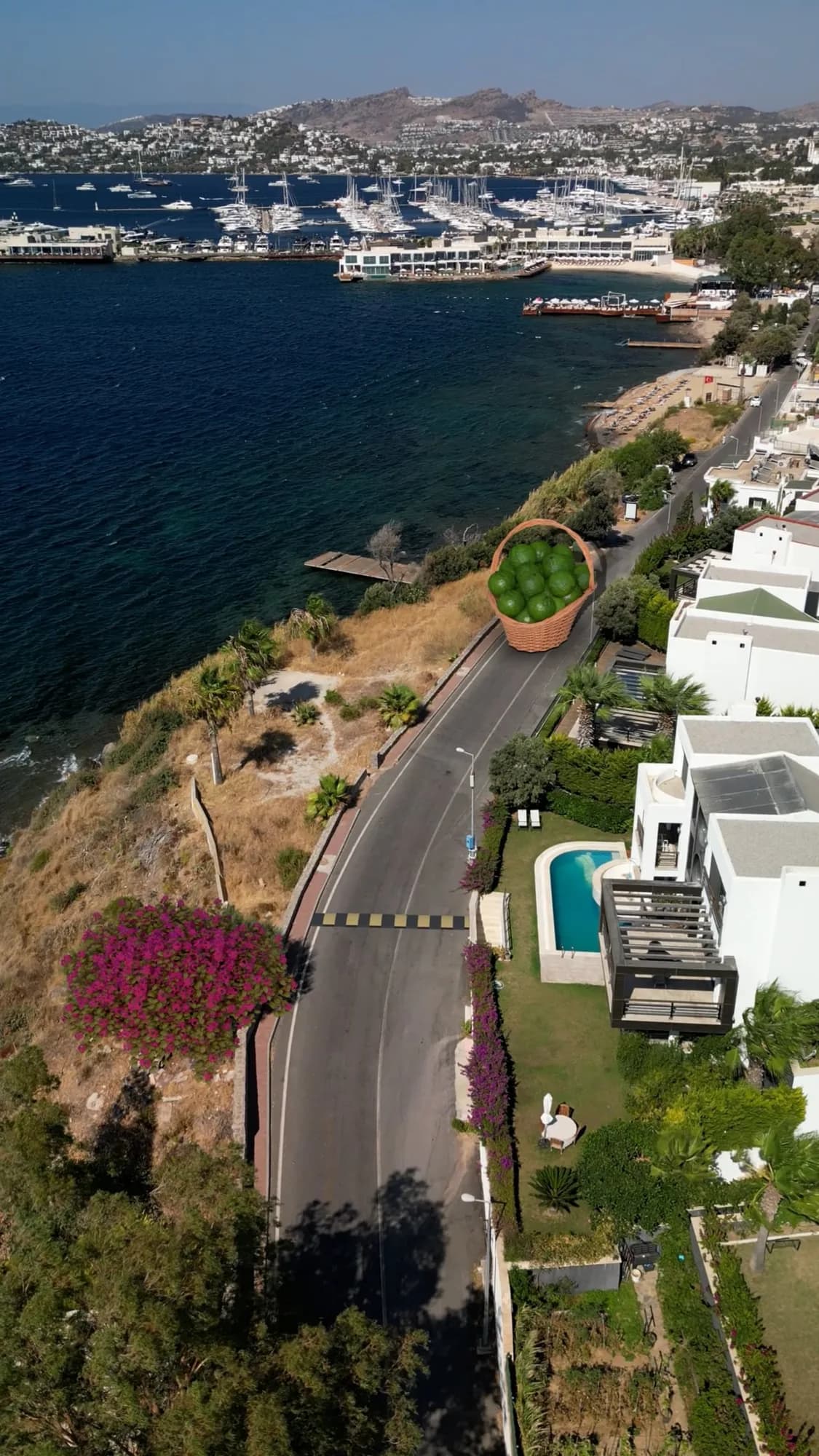
Pernod Ricard, Bodrum Green CGI film: Inspired by the vibrant spirit of Bodrum Green, this CGI film for Pernod Ricard translates summer energy into a cinematic visual language. The piece reinterprets the colours of the Aegean and its holiday atmosphere, telling the brand's story with a fresh, dynamic edit; the film was produced for social media. It is a good example of a drinks film in which the atmosphere matters as much as the product. Project page.
PROJECT VIDEO
Lipton Sparkling: A vertical product film developed for Lipton as part of ŞOK Media Network. It is the beverage-category example of the short product films that play on a retailer's screens and digital channels. Project page.
PROJECT VIDEO
ŞOK Ramadan, Crown Cola Ramadan film: A vertical product film developed for ŞOK Ramadan in collaboration with ŞOK Market. Part of the ŞOK Ramadan series made for the same period, it shows how a drink is presented inside the atmosphere of a special season. Project page.
Frequently asked questions
Can a beverage film describe the taste or effect of the drink?
Taste is suggested through visual cues: colour, cold, movement and atmosphere. Every statement about the product stays within the brand's approved copy; the film does not try to prove a claim, it tries to make the feeling of refreshment memorable.
Can the same film be used for different flavours and sizes?
Yes. Once the packaging is built correctly in CGI, a new flavour, a new size or a limited-edition label is derived from the same film; it is an update, not a new production.
Do occasions such as Ramadan or New Year need a separate film?
Usually the product stays the same and the atmosphere changes. The table setting, the light and the offer layer are refreshed for the occasion, so the same product can be adapted to several moments in the year.
Is there a shoot for a beverage film?
It depends on the project. On some work the base is real footage shot by our own team and the product is placed into it; others are built from a 3D model from start to finish. We recommend the right route for your brief.
What should I send for a quote?
A short brief with packaging files or product photos, the list of flavours and sizes, the approved product copy, the channels and the occasion (summer, Ramadan, New Year and so on) is enough. We reply within 24 hours with an approach.
Let's work out which moment, which atmosphere and how many versions will do the job for your drinks brand. Send a short brief and we'll reply within 24 hours: get in touch. For an overview of all our work, see our company deck.