
01ARTICLE
Published on
A vertical video ad is a 9:16 film watched full screen on a phone, and it is the native language of Reels, TikTok and Shorts. Producing vertical video with CGI does not mean cropping a horizontal film afterwards; it means building the scene, the product's position and the sense of scale for the vertical frame from the start. This piece covers which decisions change in the vertical format, when you need both vertical and horizontal deliverables, and how that looks in real work.
If you are planning a CGI film for social media, you will find the scope and formats on our CGI ad film production page. Here we focus on the decisions that sit on the brand's side of the table.
What is a vertical video ad, and why does it need its own thinking?
A vertical video ad is a film viewers watch across the whole screen without turning their phone, so it needs its own framing logic. In a horizontal film the eye travels left to right; in a vertical one it reads top to bottom. Two elements that sit side by side in a wide landscape either stack on top of each other in a vertical frame, or one of them falls out of shot.
In a social feed, the viewer is one swipe away from the next video. If the film doesn't know what it is showing in the very first moment, the full-screen advantage of the vertical frame is wasted. Thinking vertically means rebuilding the idea so it looks its strongest on that screen.
Why isn't cropping a horizontal film enough?
Cropping a horizontal film to 9:16 looks like the fastest route, but it often cuts out the film's best idea. The problems that show up most in cropped versions are:
- The product ends up at the edge: A product placed left or right in a horizontal frame appears half-cut in the vertical version, or disappears entirely.
- The sense of scale is lost: What makes a giant product impressive is its relationship with its surroundings; crop it and the building, street or people leave the frame, and the product becomes an ordinary object.
- Camera moves stop making sense: A move that glides left to right in a horizontal film looks like a pass through empty screen in a vertical one.
- Text and logo have nowhere to go: The copy layer collides with the parts of the screen covered by the platform's interface.
- The opening gets weaker: If the first frame of the horizontal film is a wide establishing shot, in vertical it turns into a strip that says nothing.
This is where CGI earns its place: because the scene is built digitally, the product's position, its size and the camera angle can be set separately for each format. The same idea is arranged for two frames, and neither is simply a cut-down of the other.
How do you plan framing for the vertical frame?
Vertical framing works by placing the product and the main action in the middle band of the screen, away from the platform interface. On Reels and TikTok, the top and bottom of the screen are covered by usernames, captions and buttons. If the film's key moment lands there, viewers simply won't see it.
Framing decisions worth settling at the brief stage:
- Where the product sits: Keep the product or hero image close to the centre; even with a giant product spilling past the edges, the most important detail should stay in the middle band.
- The axis of scale: The vertical frame loves height. A building facade, a tower or something rising upwards is naturally strong in vertical, while wide horizontal landscapes need rethinking.
- The copy layer: Keep headlines, prices or campaign lines off the image itself and add them as a separate layer, so a change of language or message doesn't mean remaking the film.
- The logo moment: Decide early whether the logo stays on screen throughout or appears at the end; space is tight in a vertical frame.
- Sound-off viewing: Many people watch with the sound off. The idea should land in silence, and sound should make it stronger.
If you want to go deeper on how the opening moment is built, our piece on the opening seconds of a social ad walks through six openings that stop the scroll, with examples.
When do you need both vertical and horizontal versions?
If the film will run both in social feeds and on wider screens, plan the vertical and horizontal versions together. That conversation belongs at the idea stage, not after the shoot or production, because the two versions need different framings of the same scene.
| Version | Where it's watched | What it brings out |
|---|---|---|
| Vertical (9:16) | Reels, TikTok, Shorts, stories | Closeness to the product, full-screen impact, a fast open |
| Horizontal (16:9) | Websites, YouTube, digital screens, presentations | Scale, relationship with the surroundings, cinematic wide shots |
| Square or 4:5 | In-feed posts, some ad placements | A balance between the two, with room for copy |
When both versions are planned, the same idea is placed into each format on its own terms. That also shapes budget and schedule: the number of versions and formats is one of the items that decide what a CGI film costs. You'll find how a delivery package is defined in our creative director's guide to CGI delivery.
Examples from Clytech
Clytech is a CGI, FOOH and AI advertising studio based in Istanbul and London, and a large share of our work is edited vertically for social feeds from day one. The four projects below show different sides of the vertical format and of paired deliverables.
SUWEN bus stop film: an idea conceived for vertical
In this film for SUWEN, an ordinary bus stop becomes a brand showcase and puts the collection on display at street scale. The vertical format was chosen specifically so the film would stop the scroll in social feeds. The SUWEN bus stop CGI film passed 58 million views; we told the story behind it in our SUWEN case study.
SUWEN commercial: one visual language, two frames
SUWEN's commercial was delivered in two versions. The horizontal version builds a cinematic widescreen frame for horizontal placements. In the vertical version, every shot was reframed for mobile screens, and the finesse of the texture and light carries the same effect in the vertical frame. The film was prepared for platforms like Instagram and TikTok.
PROJECT VIDEO
Three stadium film: scale in both directions
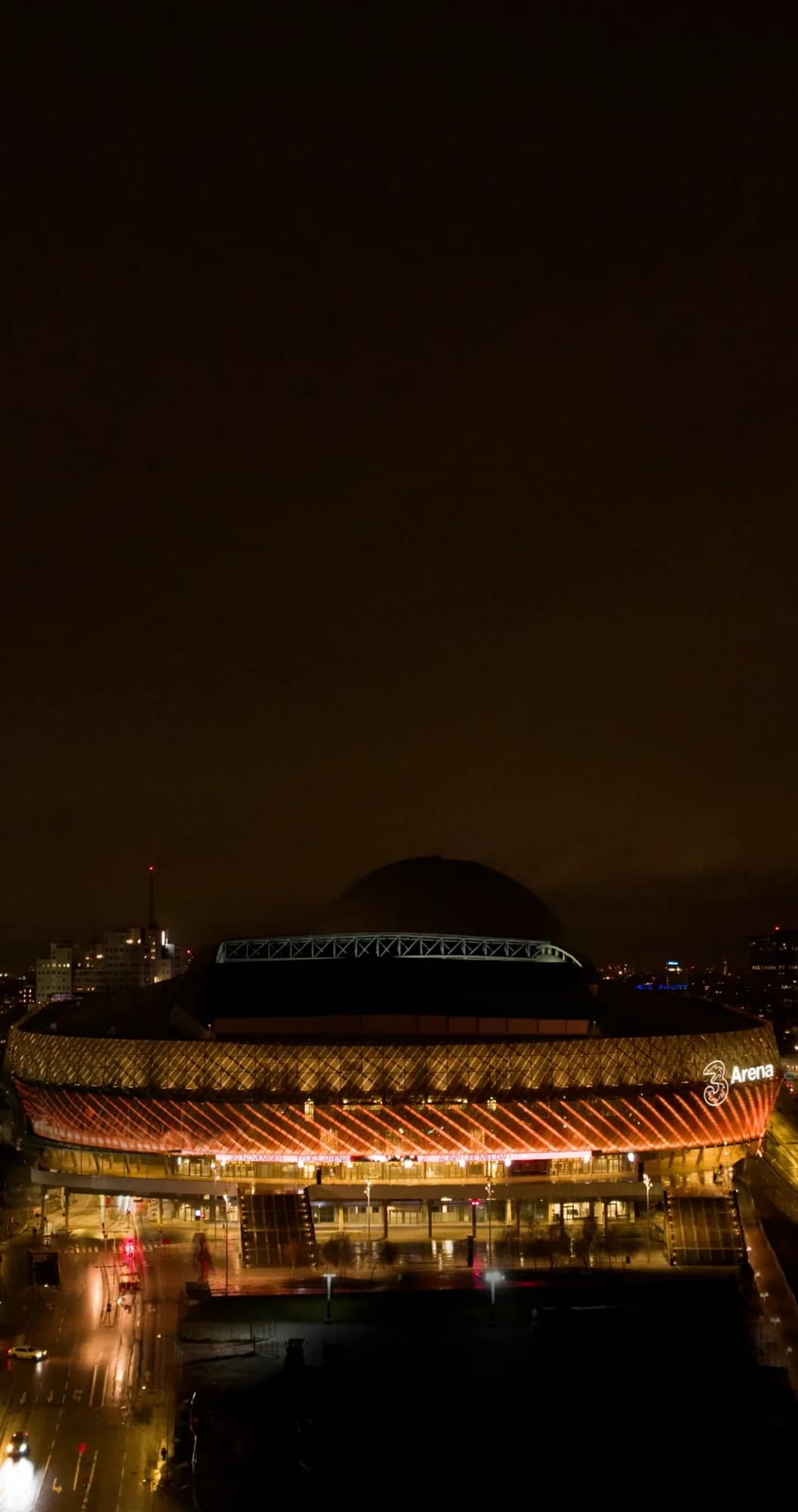
In the film for Three, a monumental stadium illusion is woven into the fabric of the city. The vertical version was designed for social media and turns the brand's energy into a moment worth stopping for in the feed. In the horizontal version, wide-angle framing brings out the structure's sheer scale and its relationship with the city; this edit was produced for everything from digital screens to presentations.
PROJECT VIDEO
Tadelle metro film: a spectacle built for the feed
Made for World Red Dress Day, the Tadelle metro film opens the doors of a fully Tadelle-branded metro train and lets thousands of chocolates spill onto the platform. The film was produced in vertical format to be shared on social media. Part of the same campaign as the chocolate commercial, it contributed to a campaign total of over 45 million views.
Frequently asked questions
What format is a vertical video ad delivered in?
The standard format for Reels, TikTok and Shorts is 9:16. Depending on the campaign plan, 16:9 horizontal, square or 4:5 versions can come from the same idea; these should be set at the brief stage.
Can a vertical version be made later from a horizontal CGI film?
Yes, but the best results come when both formats are planned from the start. A vertical version requested later means rearranging the scene; cropping alone usually cuts the product or the sense of scale.
Should I choose CGI or FOOH for vertical video?
They aren't alternatives to each other: FOOH is a CGI illusion set in a real place, and it is mostly made vertical. If you want to show the product in detail, a CGI product film fits better; if you want a street moment people talk about, look at FOOH ad production.
Is the vertical format enough on its own to make an ad spread?
No. The format is a condition, not a result. The right framing and a strong opening raise the film's chances of being noticed in the feed; the idea itself decides the outcome.
How do you start a vertical video project?
Good vertical CGI films come from projects where the format decision is made together with the idea. In your brief, it's enough to note where the film will run, how many versions you need and what will change in the copy layer; the work then runs through idea and approval, a shoot where needed, production, edit and delivery. Share your project with us and we'll get back to you within 24 hours, or browse our company presentation to see the full body of work.