
01ARTICLE
Published on
Small appliance video production means a short product film that shows, in a few seconds, what a vacuum cleaner, a neck fan, a tripod or a kids' camera actually does: on a retail screen it shows the product and the offer, in e-commerce the parts of the product, on social media the moment of use. In this category the viewer's first question is "what does it do?", and the film works only as far as it answers that question in a single movement. This guide covers the decisions specific to small appliance and electronic accessory brands, with real examples from our CGI ad film production work and the product films we produced for the retailer ŞOK.
Why is a small appliance film built differently?
Because these products are bought for a job, not a feeling. A fragrance film builds an atmosphere; a vacuum or tripod film shows the one thing the product does: the dust is lifted, the breeze reaches the face, the phone holds still, a child takes a first photo. Viewers remember the product through that job. So the film is not a feature list; it is built around a single "that's it" moment.
The second difference is moving parts. Folding legs, a spinning fan, a detachable bin, a lid that opens: none of this comes across in a photo, yet a film makes it clear in a second. The general approach to product films, including length and framing per channel, is in our product video production guide. Launch-driven tech products such as phones, headphones and smart devices are covered separately in CGI for tech product launches; this guide is about everyday appliances and accessories sold on the shelf and online.
Which moment for which product type?
Every product type has its own "that's it" moment. Finding it before the brief is written makes the rest of the film easier. The table sums up the product types we meet most often in small appliances and electronic accessories.
| Product type | Moment to show | What to watch |
|---|---|---|
| Vacuum cleaners and cleaning devices | The product moving across a surface and leaving a clean trail | Performance wording stays within the brand's approved copy |
| Fans and personal cooling | The cool air reaching the face; hair or fabric moving | The airflow is shown symbolically, with no exaggerated effect |
| Tripods, holders and filming accessories | The phone locking in place and recording starting | The folding and unfolding movement must read clearly |
| Kids' products and toy electronics | A child using the product for the first time | A warm, simple tone; the product shown in a way parents understand too |
| Office and home electronics | The product finishing a task (counting, measuring, a job done) | On-screen readouts and display text must be legible |
Each row is a separate film idea. When a brand has several products, giving each one its own moment works better than squeezing them all into one film.
Why product accuracy is critical in this category
When customers open the box, they expect the product they saw in the film. The position of the buttons, the colour of the body, where the logo sits and the parts that come in the box have to match. That is why the film is built exactly from the brand's product photos, packaging files or a 3D model or design file, and the final check is always the product itself.
The real contribution of CGI here is flexibility: once the product is built correctly, a new colour option, a new box design or a promotional label is derived from the same film. Price and offer information, which changes often on the shelf, sits on a separate layer; when the period changes, only that layer is updated. For technical products where you need to show the inside or how it works, cutaways and part-by-part views read more clearly as 3D product animation.
Which film for which channel?
One product needs as many cuts as it has channels, but all of them come from a single production.
- Shelf and retail screens: A short loop that works without sound; the product and the offer appear in the first second. We covered this approach for retailers' own screens in video content for retail media networks.
- E-commerce: The parts of the product, its scale and what comes in the box; shoppers want to see it as if turning it over in their hands before they buy.
- Social media: A vertical frame and a film that opens on the moment of use; the first second has to show the job. The details of vertical production are in vertical video CGI.
Deriving separate versions for shelf, e-commerce and social from one product film gives a more consistent brand look than shooting a different film for every channel.
Examples from Clytech
Clytech is a CGI, FOOH and AI advertising studio based in Istanbul and London. The first four product films below were produced for ŞOK as part of ŞOK Media Network; on this work, our client is ŞOK. All of them are vertical (9:16) product films. The last example is a 3D product animation made for a brand's digital channels.
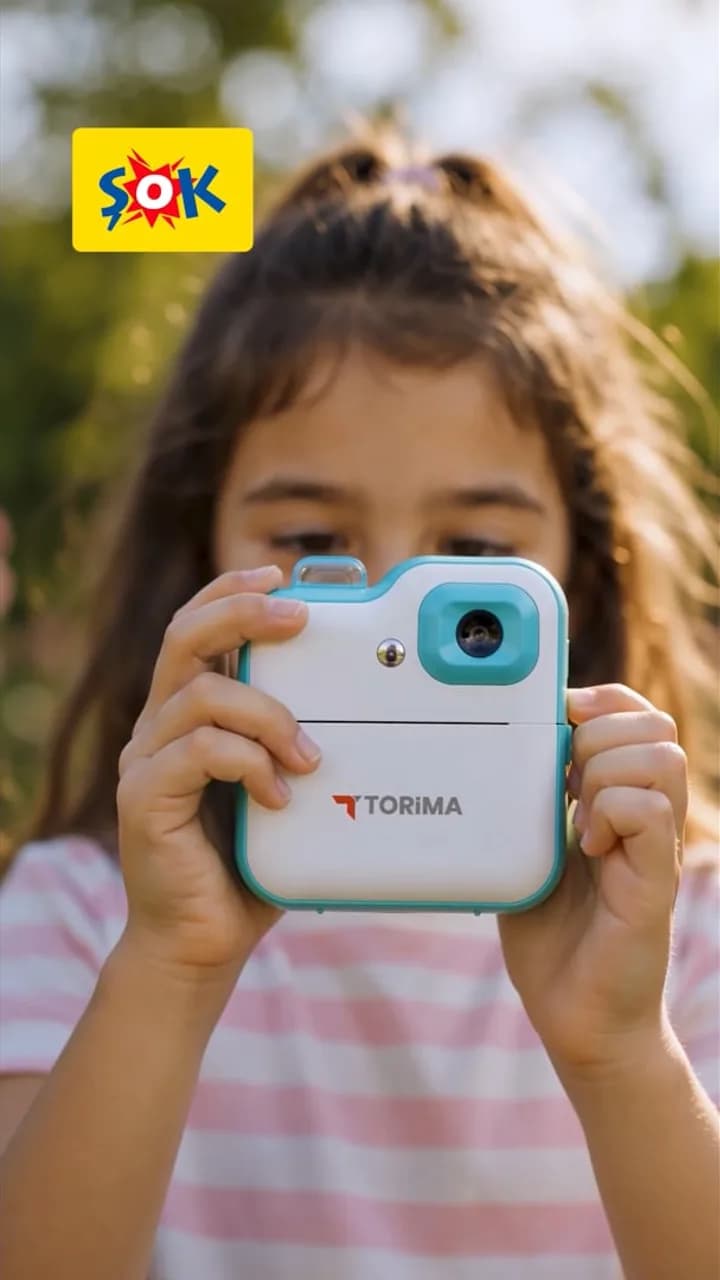
Torima kids' camera: A vertical product film developed for Torima as part of ŞOK Media Network. In kids' products the film has to speak to the child and the parent at the same time; presenting the product in a simple, warm tone is what makes the difference in this category. Project page.
PROJECT VIDEO
Arzum Lungo vacuum cleaner: A vertical product film developed for Arzum as part of ŞOK Media Network. It is an example of how a small household appliance is presented in a short, vertical product film. Project page.
PROJECT VIDEO
Torima tripod and neck fan: Two separate vertical product films developed for the same brand as part of ŞOK Media Network. Making a separate film for each product under one brand lets every product be told through its own moment of use. Tripod project page · Neck fan project page.
Scentlinq 3D product animation: This 3D animation treats Scentlinq's product with cinematic detail; light, materials and camera movement were composed to bring out the product's form. The result is a product film the brand can use across its digital channels. Project page.
Frequently asked questions
Can a small appliance video show how well the product performs?
Only within the brand's approved wording. The film is not a test; it is a scene that makes the product's job memorable, and neither the screen nor the copy goes beyond the approved product information.
Can the same film be used for different colours and models?
Yes. Once the product is built correctly in CGI, a new colour, a new box or a promotional label is derived from the same film; it is an update, not a new production.
Is there a shoot for a product film?
It depends on the project. On some product films the base is real footage shot by our own team and the product is placed into it; others are built from a 3D model from start to finish. We recommend the right route for your brief.
Can the film be made before the product is on sale?
Yes. If there is a design file, a 3D model or photos of a prototype, the film can be ready before the product reaches the shelf, so retail and e-commerce content is in place on the first day of sale.
What should I send for a quote?
Product photos or design files, packaging visuals, the approved product information, the list of channels (retail screen, e-commerce, social media) and the timeline. A short brief is enough; we reply within 24 hours with an approach.
Let's work out which moment, which channels and how many versions will do the job for your appliance or electronic accessory. Send a short brief and we'll reply within 24 hours: get in touch. For an overview of all our work, see our company deck.