
01ARTICLE
Published on
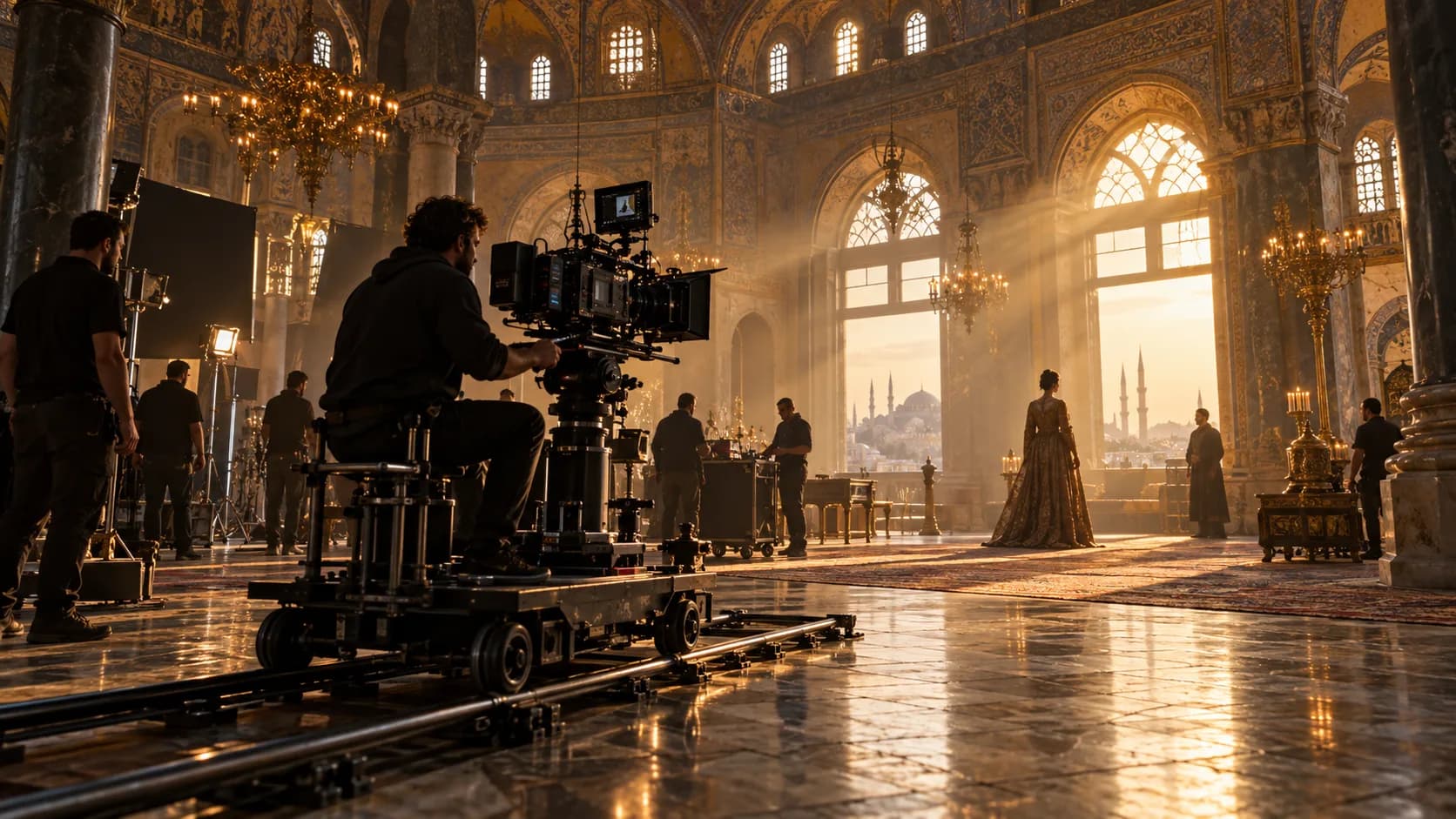
A brand film tells people what a brand believes in and how it feels; its job is to build a bond, not to sell a specific product. A promotional film explains a company, facility or service through information, and a commercial uses a specific campaign message in paid media to get viewers to act. All three can be made by the same team, even from the same shoot; purpose, tone and channel are what set them apart.
The distinction shapes the budget, the script and the media plan; a film of the wrong type can miss its purpose even when it is well made. Below you'll find one-sentence definitions, a comparison table and examples from our own work. Our services page shows how we produce commercials, social content and launch campaigns with our own team.
What are a brand film, a promotional film and a commercial?
Here are the three types in brief:
- Brand film: A film about a brand's values, story and feeling. The product may appear, but the brand is the lead; the goal is recall and belonging, not a sale.
- Promotional film: A film that presents a company, facility, service or product through information. The corporate film is its most common form, answering “who we are, what we do and how we do it”.
- Commercial: A short film made to run a specific campaign message in paid media. The goal is concrete: get people to buy a product, download an app or notice an offer.
A good brand film does three things: it carries one clear feeling or idea, it rests on a story the brand genuinely owns, and it sets up a visual language that later campaigns can carry forward. A brand film that lists product features usually turns into a long commercial.
In practice the types overlap. An emotional brand film can be cut down to run in an ad break, and a commercial can build a brand's world. Still, every film should have one main job, and that job defines its type.
Brand film vs promotional film vs commercial: what's the difference?
The core difference is purpose: a brand film builds a bond, a promotional film informs and a commercial drives action. The other differences follow from that:
| Criterion | Brand film | Promotional film | Commercial |
|---|---|---|---|
| Main purpose | Build an emotional bond with the brand | Make a company, facility or service easy to understand | Get viewers to act on a specific message |
| Sense of length | Unhurried, gives the mood room | As long as the information requires | Short and dense; the message lands early |
| Channels | Website, launches, events, social media | Corporate site, trade fairs, sales decks, recruitment, dealer training | TV, online ads, social media, DOOH |
| Tone | Cinematic, emotional, value-led | Informative, reassuring | Clear, attention-grabbing, product- or offer-led |
| Measure of success | Recall and brand perception | Understanding and trust | Reach, engagement and sales |
| Shelf life | Long; runs independently of campaigns | Updated as the company or facility changes | Stays on air for the campaign |
Channel, not type, sets the running time: the same film can be cut to different lengths for TV, social media and digital screens. That is why a commercial often has several edits.
Which one should you choose, and when?
Choose the type by the problem the film has to solve:
- Brand film: for moments when you need to explain why the brand exists, such as a new brand launch, a repositioning, an anniversary or employer branding.
- Promotional film: for situations where information builds trust, such as factory or facility tours, investor and partner presentations, trade fairs and B2B sales meetings. Short films that present a single product for retail, e-commerce and social are covered in our product video production guide.
- Commercial: for a product launch, a seasonal campaign, a promotion or a specific sales target, especially when a paid media plan is ready.
If you are stuck, two questions help: what should viewers do after watching, and where will they see the film? If the answer is “buy”, start with a commercial; if it is “understand us”, a promotional film; if it is “remember us”, a brand film. We have gathered the other points to settle before talking to a studio in questions to ask before commissioning an ad film.
Can all three come from one production?
Yes; with good planning, a single production can feed all three. One shoot day can cover the brand film's atmosphere shots, the commercial's product-led frames and the promotional film's facility or team footage on the same list. CGI product models and scenes can be reused as well: the same 3D product can be a cinematic detail in the brand film and a quick end shot in the commercial.
That means thinking about the types together from the start: which film carries the main idea, which ones are derived from it, and which channel and aspect ratio each will run in. Planning vertical and horizontal edits in the same shoot follows the same logic. Asking for “a corporate version too” afterwards often means a reshoot.
Examples from Clytech
Clytech is a CGI, FOOH and AI advertising studio based in Istanbul and London. The projects below, listed with the type shown on their project pages, show how we serve different purposes.
A commercial in an unusual channel: The Turkish Airlines national team special project is listed as a commercial film on its project page. The excitement of the national team's tournament in the US was brought to the Turkish Airlines Domestic Lounge screens through Özkan Öztürk's live commentary, with Clytech as the production partner. It shows that a commercial doesn't always run in a TV ad break; a brand's own screens can be a strong channel too.
PROJECT VIDEO
A CGI piece close to the brand film language: The Estrid cinematic CGI film is listed under CGI on its project page. It gives the personal care brand a bold cinematic treatment that blends imagination with reality, with hyper-real product visuals designed to leave a memorable brand experience in a short time.
A classic commercial: The SUWEN horizontal CGI commercial expresses the brand's elegance through cinematic visuals. We explain this kind of work on our CGI ad film production page.
Frequently asked questions
What is a brand film?
A brand film tells a brand's values, story and feeling, aiming to build a bond with viewers rather than to sell. The product may appear, but the brand plays the lead.
Is a promotional film the same as a corporate film?
A corporate film is the form of promotional film that presents a company or facility. “Promotional film” is the broader umbrella; it can also present a service, a product or a project.
Can a brand film run as an ad?
Yes. Brand films are often cut down to run as TV or social media ads. Planning this up front makes it easier to leave room in the edit for shorter versions.
How long should a brand film be?
There is no single right length; the channel and the story decide. The main version for a website or launch can run longer, while short cuts are made for social media and ad breaks.
Which type costs more?
If you are not sure which type your film falls into, let's pin down the purpose and channels together. Send us a short brief and we'll reply within 24 hours with an approach, or start with our company presentation.