
01ARTICLE
Published on
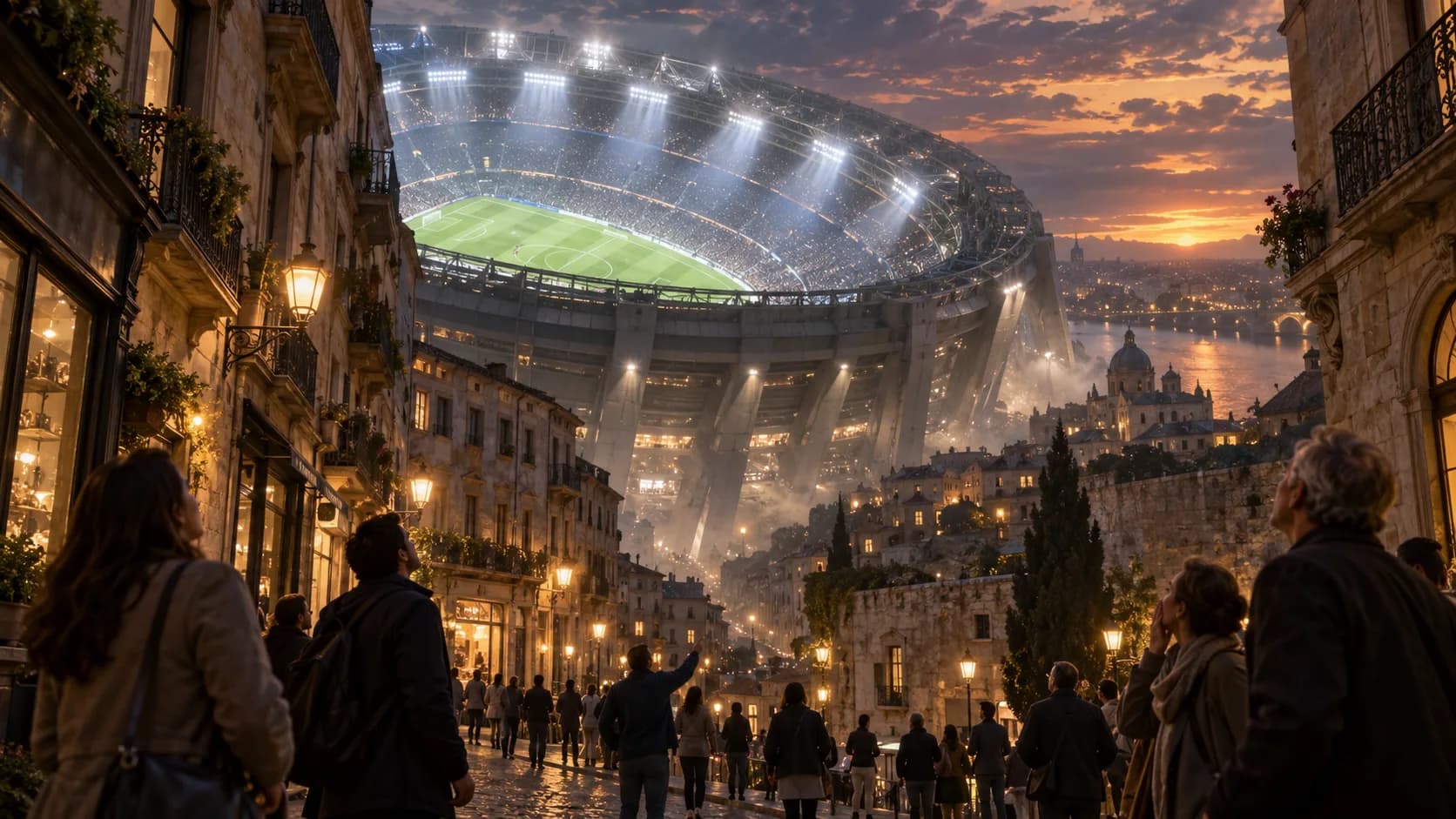
The hard part of sports marketing is making a sponsorship visible: the logo sits on the kit, the pitch or the press wall, but on social media dozens of brands post about the same big moment at once. CGI for sports sponsorship solves this by producing one memorable scene that puts the brand inside the sport, like the Eiffel Tower flipped into a golf tee or a stadium appearing in the middle of a city. This piece covers which formats work for sponsorships and big sporting moments, how to plan the timing, and four projects from Clytech.
FOOH (fake out-of-home) is a social video built on real location footage, with objects or scenes added in CGI that aren't really there. If the format is new to you, start with What is FOOH, and why does it go viral?; production and budget items are on our FOOH ad production page. Here we focus on the decisions specific to sport.
What do CGI and FOOH add to a sports sponsorship?
CGI and FOOH turn the link a sponsorship buys into an image people want to share. A sponsorship gives a brand an association and a stage, but on match day or during an opening ceremony the feed fills up with similar photos and congratulations. What stands out is content that fuses the sport and the brand into a single image.
The scenes that do this usually can't be captured by a camera alone. Flipping a landmark upside down, dropping a stadium into a city or turning a phone into a hoop is only possible with CGI. FOOH places those scenes into real city footage, so viewers stop and ask “is this real?”. We look at what shared work has in common in Five things viral CGI campaigns have in common.
Which formats stand out around sporting moments?
The formats that work in sports marketing tie the brand to something familiar from the sport or the host city. The table sums up five common ones and where each is strongest.
| Format | What it does | Best moment | Clytech example |
|---|---|---|---|
| Giant illusion on a landmark | Turns the host city's icon into an object from the sport | Before an Olympics or tournament, opening week | J.Lindeberg, Eiffel Tower |
| A sports venue in the city | Brings an image like a stadium into the middle of town | Season openers, match days | Three |
| The product becomes kit | Makes the product part of the game, with a sense of fun | When talking to street sport and youth culture | HONOR |
| In-venue screen content | Brings match excitement into the brand's own spaces | Throughout a tournament, around kick-off | Turkish Airlines |
| Vertical and horizontal cuts | Edits one idea separately for social and widescreen | When the campaign runs across several channels | Three |
It also helps to start from the type of sponsorship. With a team, the colours, kit and home ground lead; with an event, it's the host city and its landmarks; with an athlete, it's their movement and equipment. When the illusion hangs on one of these, viewers link the brand to the sport without needing an explanation.
Even if you aren't an official sponsor, the everyday side of sport, such as a basketball hoop, a run or a kickabout, offers plenty of room.
When should CGI come in on a sponsorship calendar?
Around sport, timing matters as much as the idea; content that arrives late can miss the conversation entirely. It helps to split the calendar into three phases:
- Before: announcement and countdown. The main illusion that introduces the sponsorship goes out here, and this is the phase with the most production time.
- During: content for match days and the length of the tournament. The core idea is ready in advance, and small variations are updated to follow the news.
- After: celebrations, thank-yous or the end of the season. For moments whose outcome isn't known in advance, alternative endings can be prepared.
CGI's advantage here is that it lets you prepare early: the main scene is produced ahead of time, and small changes tied to a result or the news cycle are added later. We confirm the exact schedule after the brief.
Examples from Clytech
The four projects below use sport from different angles: an Olympic sponsorship, a stadium set into a city, street basketball and a national team project. Clytech is a CGI, FOOH and AI advertising studio based in Istanbul and London.
The J.Lindeberg Paris Olympics film celebrates J.Lindeberg's sponsorship of the U.S. Golf Team at the Paris Olympics. The CGI film flips the Eiffel Tower upside down into a giant golf tee, with a massive golf ball resting on top. Using Paris's most recognisable landmark as the brand's stage, it was produced as a FOOH piece for social media.
PROJECT VIDEO
In the Three stadium film, a monumental stadium illusion is woven into the fabric of the city. Clytech handled the concept and production, building the stadium in CGI on top of real city footage. The vertical cut was designed for social media, and a horizontal version of the same illusion was edited for widescreen.
PROJECT VIDEO
In the HONOR basketball hoop film, a giant HONOR smartphone becomes a basketball hoop in the heart of Istanbul. The playful FOOH illusion links tech with street culture and was designed to travel across social feeds. The idea doesn't rely on an official tournament or team, and it shows how a brand can speak the language of sport on the street. We look at the same film as a tech launch in CGI for tech product launches.
The Turkish Airlines national team special project brought the excitement of the stands into the airline's passenger lounges: the national team's tournament journey in the US reached the Domestic Lounge screens through Özkan Öztürk's live commentary. It's a commercial film project with Clytech as production partner, and it shows that a big sporting moment can live in a brand's own spaces as well as on social media.
What should a sports project brief include?
For sports projects, the brief should settle the limits of the sponsorship and the calendar up front. These points speed up production:
- Calendar: announcement, match and closing dates, and which content goes out when.
- Channels: social media, screens, stores or venues, and whether you need vertical, horizontal or both.
- Scenarios: which alternatives to prepare for content that depends on a result.
Frequently asked questions
Can you make sport-themed FOOH without an official sponsorship?
Yes, with ideas built on sport itself and street culture; the HONOR basketball hoop film is one example.
Is the stadium or landmark actually filmed?
On most of our projects the base is real footage, and the illusion is built on top of it in CGI. In the Three film, the stadium was built in CGI on top of real city footage.
Can one idea be cut for both social and widescreen?
Yes. The Three stadium illusion has a vertical version for social media and a horizontal version for widescreen channels. Planning the number of versions and formats up front also makes the budget clearer.
Can content be prepared for a match whose result isn't known yet?
Yes. The main scene is produced in advance, and alternative endings can be prepared for the parts that depend on the result.
If you want to turn a sponsorship or a big sporting moment into a scene people will share, send us your brief and we'll come back within 24 hours with an approach. You can also see how we work on our CGI ad film production page.