
01ARTICLE
Published on
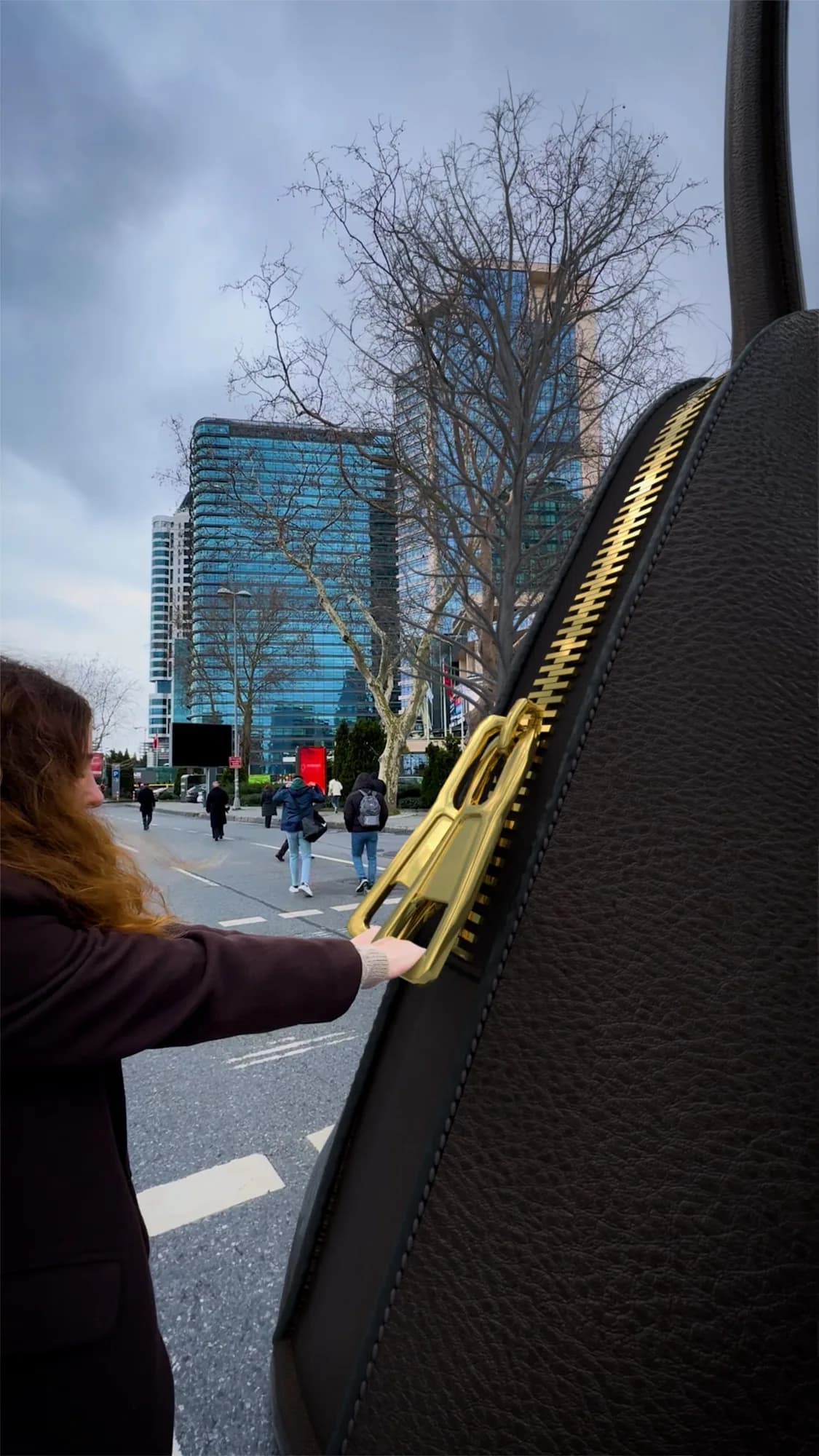
A fashion CGI campaign is a short film, built for social media, that shows a collection at an unexpected scale inside a real city, store or landmark. Fashion brands use it most for collection launches, store events and seasonal drops, because one strong image gets talked about far faster than a lookbook. The best-known branch of this approach is FOOH (fake out-of-home): a video illusion in which a giant shoe, bag or coat appears to really stand in the middle of the city. You can see the full scope of the service on our CGI ad film production page, and the out-of-home side on our FOOH ad production page.
This piece covers when fashion brands turn to CGI and FOOH, how a strong fashion idea is built, how the season calendar shapes the work, and what our projects for brands such as J.Lindeberg and Vatkalı teach.
When do fashion brands use CGI and FOOH?
Fashion brands use CGI and FOOH when a product or collection needs to reach a lot of people in a short window. In practice, that usually means one of these moments:
- Collection launch: the hero piece of the new season (a shoe, a bag, a piece of outerwear) is shown at city scale.
- Store or mall event: the impact of a physical opening or window installation is carried to everyone who was not there on the day.
- Sponsorships and major events: the brand's link to a sporting or cultural event is told through a familiar landmark in the host city.
- Seasonal change: a single product that carries the mood of the season, like a winter coat or a summer bag, becomes a scene that tells the season itself.
The common thread is simple: a fashion brand is not trying to publish a product list, it wants one moment people will talk about. CGI scales the product up, places it in the right setting and puts it inside a story. The finished film can then run on the brand's own channels, in paid social and across event communications at the same time.
How do you build a strong CGI idea for fashion?
A strong fashion CGI idea pairs the most recognisable feature of the product with a familiar place, in a way you can explain in one sentence. "A giant shoe is flown into the department store." "The tower puts on a giant coat." Four questions make that easier:
- What is the product's silhouette? Shapes people recognise from a distance, such as shoes, bags and outerwear, work best when scaled up. For products with small details, the idea leans on the scene built around the product rather than the product alone.
- Who is the place familiar to? A building your target city or audience already knows makes viewers think "I know that spot", and that recognition is one of the strongest drivers of sharing.
- Is there movement in the story? A product arriving somewhere, wrapping a building or transforming keeps people watching to the end. A static giant product surprises in the first second and loses them in the second.
- Can you read the brand at a glance? The logo, colour or signature detail should appear in the opening seconds. The visual language should stay clean, so the spectacle never upstages the product.
We look more closely at what memorable campaigns have in common in what viral CGI campaigns share.
Launch, store event or seasonal campaign: which format fits?
The right format depends on the campaign goal and on whether the brand already has a physical event to build on. The table below covers the four situations fashion brands run into most often.
| Situation | Format that fits | What to watch |
|---|---|---|
| Collection or hero product launch | A giant product on a city landmark (FOOH) | The product's silhouette and how well known the place is |
| Store, mall or window event | A CGI film that extends the physical event | Keeping the film's story consistent with the real event |
| Seasonal change or key date | One scene that carries the mood of the season | Release timing that matches the season |
| Sponsorship or major event | An illusion built around the host city's landmark | Releasing in the week of the event |
These situations often overlap. A collection launch can also be a store event, in which case the film uses the physical event as the start or the end of its story. For launch-led work, we compare five different FOOH formats with real examples in FOOH for product launches.
How does the season calendar shape a fashion campaign?
Because fashion runs on seasons, the release date of a CGI campaign matters as much as the idea. A winter collection film should be live in the week the coat hits the windows; a summer bag film belongs in the weeks when people are planning their holidays. That is why we recommend planning backwards from the release date:
- First, lock the release date and the channels the film will run on.
- Then comes the idea and sign-off, followed by a shoot if one is needed, production, edit and delivery.
- If vertical, horizontal or square versions are planned from the start, there is no last-minute reframing.
- If everyone who signs off (brand, agency, regional teams) is named at the outset, the schedule holds.
At Clytech we get back to every brief within 24 hours, and we can usually talk about production in days rather than weeks. Even so, for work that has to land in the first week of a season, starting early means a calmer approval process.
Examples from Clytech
Clytech is a CGI, FOOH and AI advertising studio based in Istanbul and London. We have worked with 85+ brands in more than 15 countries, and four of our fashion projects show what the formats above look like in practice.
J.Lindeberg: a giant shoe at NK
J.Lindeberg's giant shoe film at NK Mall was made to amplify the brand's OOH activation in Stockholm. Before arriving at the iconic NK department store, the giant version of the brand's new shoe is carried across the city by drones. The film gathered over 200,000 views across Instagram, TikTok, Twitter and LinkedIn, and it is a clear example of how a physical event can be scaled up on social media.
PROJECT VIDEO
J.Lindeberg: the Paris Olympics
J.Lindeberg's Paris Olympics film celebrates the brand's sponsorship of the U.S. Golf Team. The Eiffel Tower is flipped upside down into a giant golf tee, with a massive golf ball resting on top. It is a vertical FOOH piece that tells a fashion brand's sponsorship story through the host city's most recognisable landmark.
Vatkalı: a bag collection
Vatkalı's bag collection film turns the collection into a bold installation and stages it at city scale. Made in vertical format for social media, it shows how a whole collection, rather than a single product, can be presented, and how that gives the brand a cinematic presence.
PROJECT VIDEO
Galata Tower: a giant coat
The Galata Tower coat installation wraps Istanbul's landmark in a giant coat, a fashion-focused FOOH illusion. By putting fashion and architecture in the same frame, it shows how a change of season can be told in a single image.
CGI or AI: which should a fashion brand choose?
If the product itself has to be seen, and scale, place or illusion sits at the heart of the story, CGI and FOOH are the right choice. If you want to convey the atmosphere of a season through imaginative scenes, AI fashion films are a strong option too; we cover that side, with the Prada and Roman examples, in AI fashion films. Some campaigns use both approaches in the same project. When deciding, ask one question: is it the product itself that viewers should remember, or the feeling of the season?
Frequently asked questions
What does CGI do for fashion advertising?
CGI lets you show a product or collection at scales and in places that would be hard to build for real. Fashion brands use it mostly for launches, store events and seasonal campaigns, to create one moment that gets talked about on social media.
Does FOOH work for fashion brands?
Yes. Products recognisable from a distance, such as shoes, bags and outerwear, are a natural fit for FOOH once they are scaled up to city size. Our work for J.Lindeberg and Vatkalı are examples of the format in fashion.
How can CGI extend a physical store event?
By building a film that uses the real event as the start or the end of its story. As in J.Lindeberg's shoe film at NK, the film follows the product's journey to the venue and carries the event to everyone who was not there on the day. We look at how shopping malls use the same approach for seasonal moments in shopping mall CGI campaigns.
What formats does a fashion CGI campaign come in?
For social media, 9:16 vertical is usually the main format; horizontal and square versions of the same idea can be planned if needed. The easiest route is to say up front which channels the film will run on.
Let's talk about an idea for your collection
If you are looking for a moment the city will talk about, for a new season, a store opening or a sponsorship, we can come back with a few ideas built around your product and your target city. Share your brief with us, or take a look at our company presentation first.