
01ARTICLE
Published on
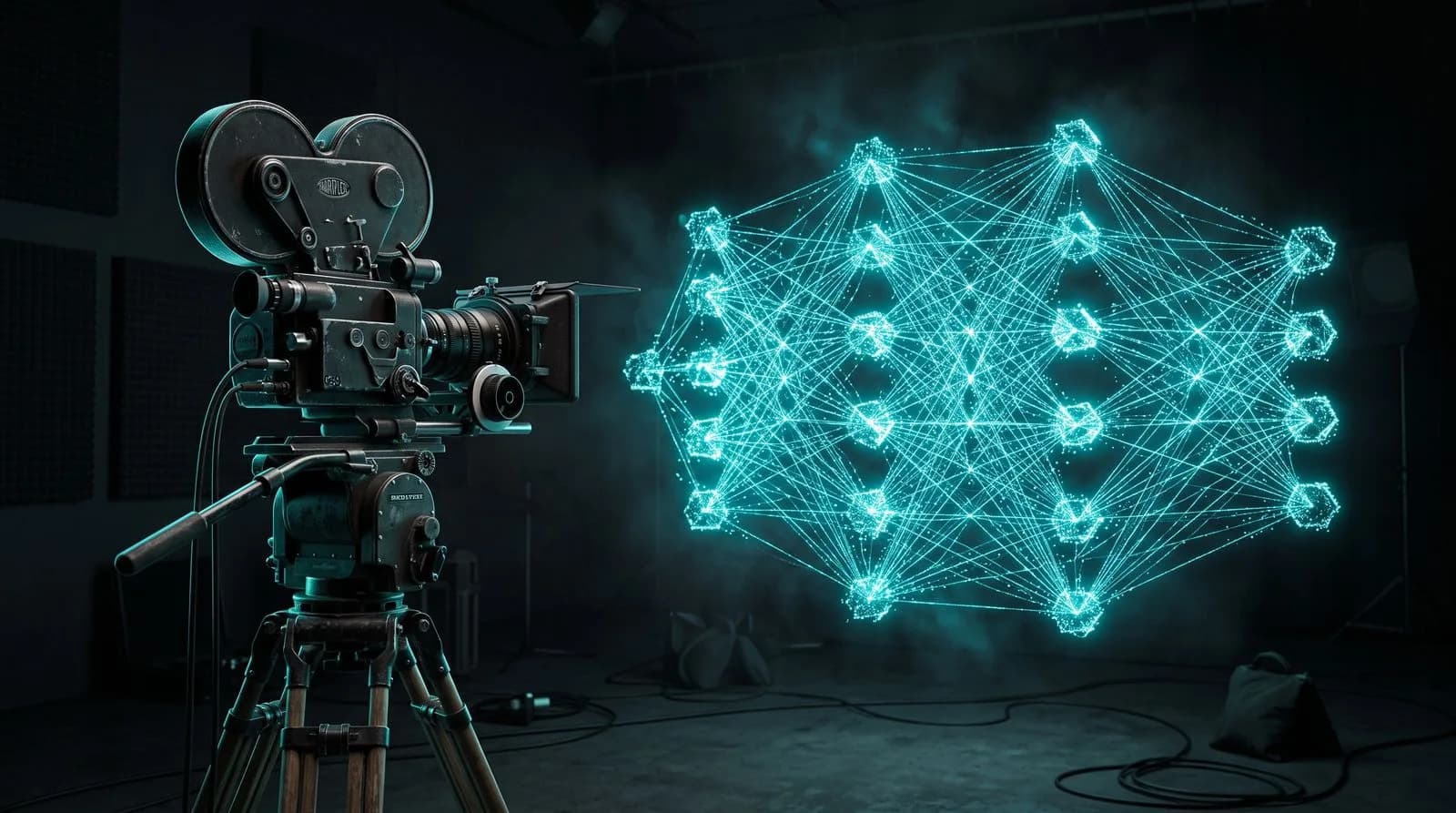
When a new campaign film comes up, there are now two routes on the table: traditional production with a camera, a set and a crew, or AI production with generative models and digital tools. Both answer the same brief in different ways, but they differ sharply in process, cost, speed and flexibility. You can see what we produce with AI on our AI ad film production page; here we compare the two without exaggeration.
What changes in the process?
In short: idea and approval, a shoot if needed, CGI production, edit and delivery. You sign off at every stage.
AI production is iterative. Concept, production and revisions overlap; an idea can become an image the same day and be regenerated if it doesn't land. Pre-production gets lighter, while curation and direction matter more: choosing the right option for the brand out of hundreds of variations and keeping the look consistent is a craft in itself.
Where do the costs move?
- In traditional production most of the budget goes to the physical world: location, set design, equipment, travel, cast and crew.
- In AI production most physical items shrink; the cost shifts to the time of an experienced team, compute and the number of iterations.
To be honest, AI production isn't always cheap. For work that demands brand consistency, product accuracy and high resolution, expert time can approach the cost of a mid-sized shoot. We explain how the line items add up in what decides the price of a CGI ad film.
Speed and flexibility
The speed difference shows most in revisions. In traditional production, changing the framing after the shoot often means a reshoot. With AI-assisted production, regenerating the same scene with a different product colour, background or format takes far less time; going from concept approval to delivery takes days rather than weeks on most projects.
Which route for which job?
| Need | Better route |
|---|---|
| Emotional performance, a real human story | Traditional shoot |
| Product detail, impossible scenes | CGI |
| Fast concept exploration, many variations | AI |
| A brand character or mascot | AI, with CGI where needed |
| A hero scene, the product and many formats together | Hybrid |
The realistic answer: hybrid production
For work that needs emotional performance and a human story, the camera is still unmatched; for product detail, impossible scenes and high variation, CGI and AI lead. That's why the right model for most projects is hybrid: hero scenes on camera, the product and environment in CGI, variations with AI. We walk through how that mix is built in our hybrid production guide.
An example of a real shoot and CGI working together is Tadelle's chocolate film: a produced CGI film that reached about 29 million views. We collected how AI is actually used across campaigns in AI advertising examples from Turkey.
Frequently asked questions
Will AI production replace traditional production?
Not entirely. For work that needs human performance and a real sense of place, the camera is still strong; AI makes the biggest difference in concepts, variations and specific production tasks.
Why isn't AI production always cheap?
The expert time spent on brand consistency and product accuracy can be significant; the real gain is getting many formats and versions from one idea.
Which one should I choose?
It depends on your goal and idea. Send us your brief and we'll recommend AI, CGI, a shoot or hybrid, with our reasoning.
PROJECT VIDEO