
01ARTICLE
Published on
Episodic social media content is a campaign built as a series: the same idea and the same format return episode after episode, and the audience starts to expect the next one. A single video creates a moment; a series builds a habit. If your brand wants consistency on social, the useful question isn't "what do we post this week" but "which format will people come back to".
In this article we look at what actually makes a series a series, which formats suit which goals, and how to plan the episodes, using real work as examples. You can see how we produce commercials, social content and launch campaigns under one roof on our services page.
What is episodic social media content?
An episodic series is a run of short videos published under one name, with a repeating structure and a recognisable look. What turns a set of videos into a series isn't how many there are; it's the moment a viewer watches the second one and thinks "I know this". A well-built series has three things at once:
- A repeating structure. Every episode opens with the same question, moves in the same order and closes in a similar way. Viewers know what they're getting; what they're curious about is what happens this time.
- A recognisable identity. The series name, typeface, colours, music and any host or character stay the same from one episode to the next.
- Episodes that stand alone. Someone who lands on episode three in their feed may never have seen the first two. Each episode has to work on its own, while giving a little extra to people who follow the series.
When does a series make more sense than a single film?
A series is the right choice when you have several products or messages to cover, when you want to stay visible across a whole period, or when you want to extend an idea that has already landed. When the goal is one big moment, a single film does the job better. The table below puts the two side by side.
| Situation | Single film | Series |
|---|---|---|
| Goal | Launch, announcement, one big moment | Consistency, habit, visibility across a period |
| Number of messages | One product, one idea | Many products or topics, one per episode |
| Relationship with the viewer | Surprises and gets shared | Gets expected and followed |
| Production | One intense push | Planned up front, episodes prepared together |
| Learning | You see the result after it's out | Reactions to early episodes shape the later ones |
The two don't have to be alternatives. A single film that draws more attention than expected can earn a sequel, which is exactly how the SUWEN example below grew. If you're curious about why some ideas travel in the first place, our article on brand virality in 2026 focuses on that question.
Which series formats work?
The formats that work are the ones that make the same promise in every episode: the outcome of a contest, the finished dish, what the illusion will turn into this time. These are the five that brands use most often.
| Format | The promise in each episode | Who it suits |
|---|---|---|
| Contest and challenge | Who wins, and how far can the rule be pushed this time? | Retail, food, brands with a wide product range |
| Recipe and how-to-use series | What's being made today, and how does it turn out? | Food, kitchen, personal care, home products |
| Continuing illusion | What will the familiar location become this time? | Fashion, beauty, tech; brands working with CGI and FOOH |
| Character or host series | What is the familiar face up to in this episode? | Brands building long-running communication |
| Seasonal series | A new episode every day through Ramadan, the holidays or a season | Brands that campaign around the calendar |
When you choose a format, look at what your brand already has to work with. If you have a large range, structures that give each episode one product run comfortably. If you have a single hero product, an illusion series that shows it in different places or situations is a better fit.
How do you keep a series consistent?
Consistency comes from a short format guide written before production starts. It isn't a long document; it's one page that lists the parts of the series that will not change. It should cover:
- The series name and how episodes are titled. Viewers should be able to connect one episode to the next.
- A fixed opening. Every episode starts with the same line, the same image or the same sound. We explain why the opening matters so much in our article on the opening seconds of a social ad.
- The episode skeleton. The order of the beginning, middle and close, and where the product or brand appears.
- Look and sound. Colours, typeface, music, subtitle style.
- Tone. Is the series playful, instructive, calm? A tone that shifts between episodes makes the whole thing feel scattered.
- What is allowed to change. The location, the product, the guest, the recipe. Naming the variable up front saves you from debating it every episode.
In series built around a character or a host, identity matters even more: appearance, way of speaking and behaviour should feel like the same person every time.
How do you plan the episodes?
An episode plan is the schedule that fixes the start, the end and the publishing rhythm before production begins. Planning the episodes as a season rather than one at a time makes both approvals and production easier. The steps look like this:
- Define the season. When does the series start and when does it end? Is it tied to a period, or open-ended?
- List the episode topics up front. Which product, recipe or location goes in which episode? If the list is approved at the start, the episodes can be prepared together.
- Open with a teaser. A short teaser teaches the audience the format and the name, so episode one can go straight into the content.
- Fix the publishing rhythm. The same days, similar times. Rhythm is what makes a series something people expect.
- Learn from the early episodes. Which opening holds attention, which topic draws comments? Adjust the later episodes accordingly, without changing the core of the format.
- Think about the finale and what follows. Does the series close with a result, or lead into a new season?
On the production side the flow stays simple: idea and approval, a shoot if needed, production, edit and delivery. The difference with a series is that this flow is set up once for all the episodes rather than for a single film. Because most episodes will be watched vertically in the feed, it's worth making the framing decisions alongside our guide to vertical video.
Examples from Clytech
Clytech is a CGI, FOOH and AI advertising studio based in Istanbul and London. We've worked with 85+ brands on 150+ projects, and the three pieces below show how different series formats are put together.
ŞOK 100 TL Challenge: a series in a contest format
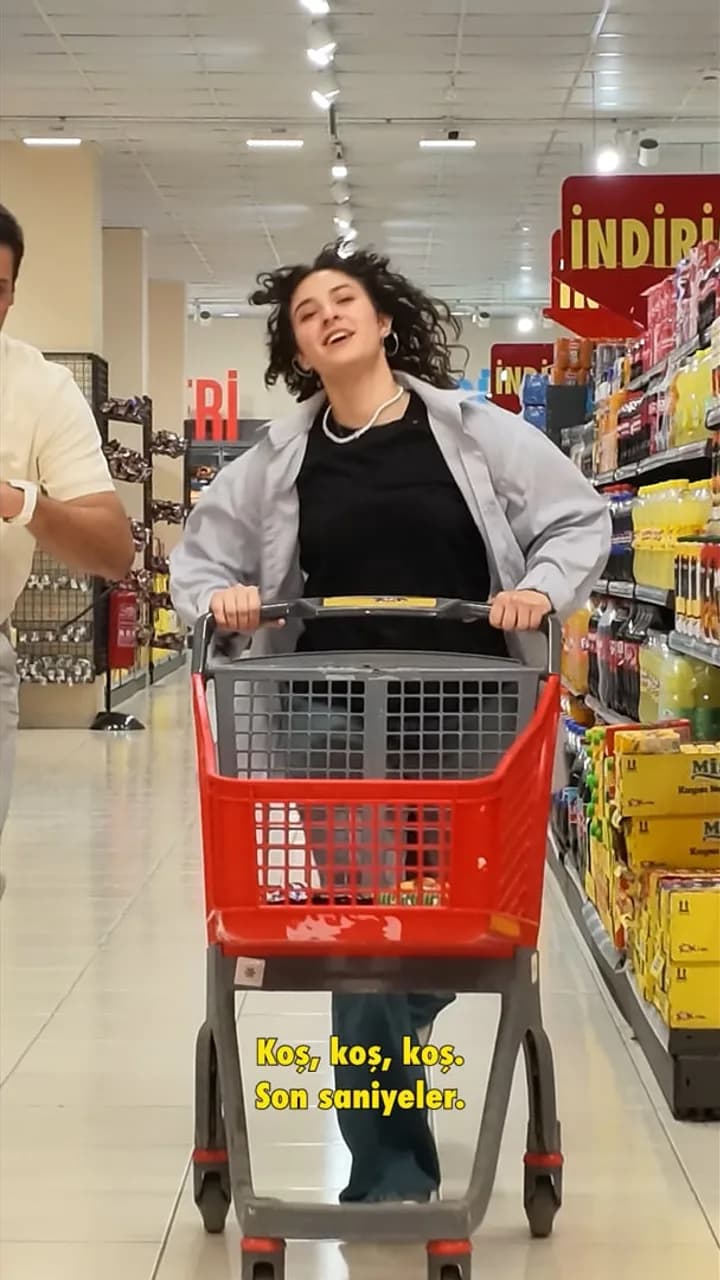
ŞOK 100 TL Challenge is a competition format we developed in collaboration with ŞOK Market. The series opens with a teaser and continues with episodes that carry the same competition format. The episodes were made in vertical 9:16 for social media, and the series name and structure stay the same from one episode to the next.
PROJECT VIDEO
ŞOK Ramadan, What Shall I Cook Today: a recipe series
Made for the Ramadan period, What Shall I Cook Today is a recipe series that takes on a different dish in each episode. The series name stays fixed while the subject changes: beyti in one episode, a börek or a dessert in another. It's a good example of how a seasonal series builds continuity by asking the same question again in every episode. We cover where this kind of content sits in retail in our article on video content for retail media networks.
SUWEN bus stop: part two of an idea that landed
The bus stop CGI film we produced for SUWEN turned an ordinary bus stop into a brand showcase and passed 58 million views. Part two was conceived as a continuation: a bus stop once again, the familiar format of part one, and fresh ideas that push it forward. It shows what a single film needs in order to become a series, which is a frame viewers recognise and a surprise that changes inside it.
PROJECT VIDEO
Common mistakes when planning a series
Most series don't fail on the idea; they fail on discipline. These are the mistakes we see most often:
- Reinventing the format every episode. Viewers look for what they recognise; a structure that keeps changing erases the sense of a series.
- Making episodes depend on each other. If someone who missed the previous episode can't follow, you lose every new viewer who arrives from the feed.
- Showing the product the same way every time. The format should stay fixed, but the product's role in the episode can change.
- Breaking the rhythm. A series that appears irregularly stops being something people wait for.
- Not planning the ending. A series with no defined end tends to fade out on its own; a planned finale or a new-season announcement is stronger.
Frequently asked questions
How many episodes should a series have?
As many as the idea can carry. Starting with a short season lets you see whether the format holds; if interest continues, you can always add another season.
Are episodes produced one by one or together?
For most series it's more efficient to plan and prepare the episodes together. The look stays consistent, and the publishing rhythm doesn't depend on production.
Can a single successful video become a series later?
Yes. Keep the frame the audience liked and refresh the idea inside it; part two of the SUWEN bus stop work was built this way.
Does the series approach work for CGI and FOOH too?
It does. Bringing back the same location or the same product with a different illusion each time pairs FOOH's element of surprise with familiarity.
Wrapping up
Consistency on social media doesn't come from posting more; it comes from building a format people return to. A series with a fixed name, structure and identity, combined with one surprise that changes each episode, becomes something the audience expects. If you'd like to talk through a series idea for your brand, get in touch and we'll come back within 24 hours; to see the full range of our work, browse our company presentation.