
01ARTICLE
Published on
The core difference between FOOH and classic out-of-home (OOH) advertising is where it is seen. OOH lives on a physical site such as a billboard, a bus shelter or a building façade, and people see it on the spot. FOOH is a video built on real city footage with CGI, and people see it on social media. In classic OOH you rent the site and put the creative on it. In FOOH there is no site to rent; the budget goes into producing the idea, and the film is designed to be shared in the feed. This guide puts the two side by side, shows which goal each one serves and explains how they work together in a single campaign, with real examples from our FOOH ad production work.
What is FOOH, and how is it different from OOH?
FOOH (fake out-of-home) is a social video that adds a giant product or a scene that is not really there to footage of a real location, while classic OOH is advertising that physically exists in that location. Both use the city as a stage, but one speaks to people in the street and the other to people on their phones. Someone walking past a billboard sees the ad and carries on. Someone watching a FOOH film stops at the question "Did that really happen?", leaves a comment and sends it to a friend. We covered the definition and why these films get shared in What is FOOH and why does it go viral; here the focus is the comparison.
Comparison: where it is seen, who sees it, how long it lasts
The table below compares the two approaches on the questions a marketing manager actually asks when deciding.
| Question | Classic OOH | FOOH |
|---|---|---|
| Where it is seen | On a physical site, on the spot | In the social feed, on a phone |
| Who sees it | People passing that location | Everyone the post reaches; no city or country limit |
| Physical limits | The size and position of the site | None; giant products, breaking billboards and bus stops turned into shop windows are possible |
| Budget items | Site rental, print and installation, campaign duration | The idea, a shoot if needed, CGI production and versions; no site rental |
| How long it runs | As long as the rental period | As long as the film stays online and keeps being shared |
| Revisions | Hard to change once printed | Scenes and versions can be updated before launch |
| Measurement | Traffic and reach estimates | The platforms' own counters: views, shares, comments |
What shapes a FOOH budget is covered in a separate guide, FOOH cost: 8 factors that shape the budget. The key point here is that the two budgets go to different places, and they are usually planned side by side rather than instead of each other.
Which one fits which goal?
If your goal is steady visibility in a specific area for a set period, classic OOH is the right tool. If your goal is to be talked about on social media, to turn a launch into a moment or to travel without geographic limits, FOOH is the better fit. A short checklist:
- Local, continuous reminders: If you want to be seen every day around a store, a mall or an airport, classic OOH does the job.
- A launch moment: If you want to announce a new product with one strong image, FOOH stages that image at city scale in a form people share.
- An idea that is physically impossible: A giant bottle, a product breaking out of a billboard, a bus stop turned into a shop window: these ideas only work as FOOH.
- Content for social channels: If the campaign needs a vertical film that fits Reels, TikTok and Shorts, FOOH delivers exactly that.
- A limited media budget: If you would rather invest in the idea than in site rental, FOOH moves the budget into production.
How do the two work together?
The strongest setup is usually the one where both are planned together: the classic OOH campaign runs in the city, and the FOOH version of the same campaign shows the "impossible" state of that site on social media. The product on the billboard steps out of the billboard in the FOOH film; the poster at the bus stop turns the whole shelter into a shop window. The physical campaign becomes a story on social media, and the social audience recognises the site it has seen in the street. One idea works twice: once in the street, once in the feed. The production flow is short: idea and approval, a location shoot if needed, production, edit and delivery of vertical and horizontal versions.
Is FOOH the same as a 3D billboard?
No. An anamorphic 3D billboard is a type of OOH: it plays on a physical screen and is watched on site. FOOH is a video illusion made for social media. The two are often confused because a FOOH film can also stage a 3D-billboard look. We explain the difference in full in FOOH vs 3D anamorphic billboards.
Examples from Clytech
Clytech is a CGI, FOOH and AI advertising studio based in Istanbul and London; each of the projects below rebuilds a classic out-of-home site in the language of FOOH.
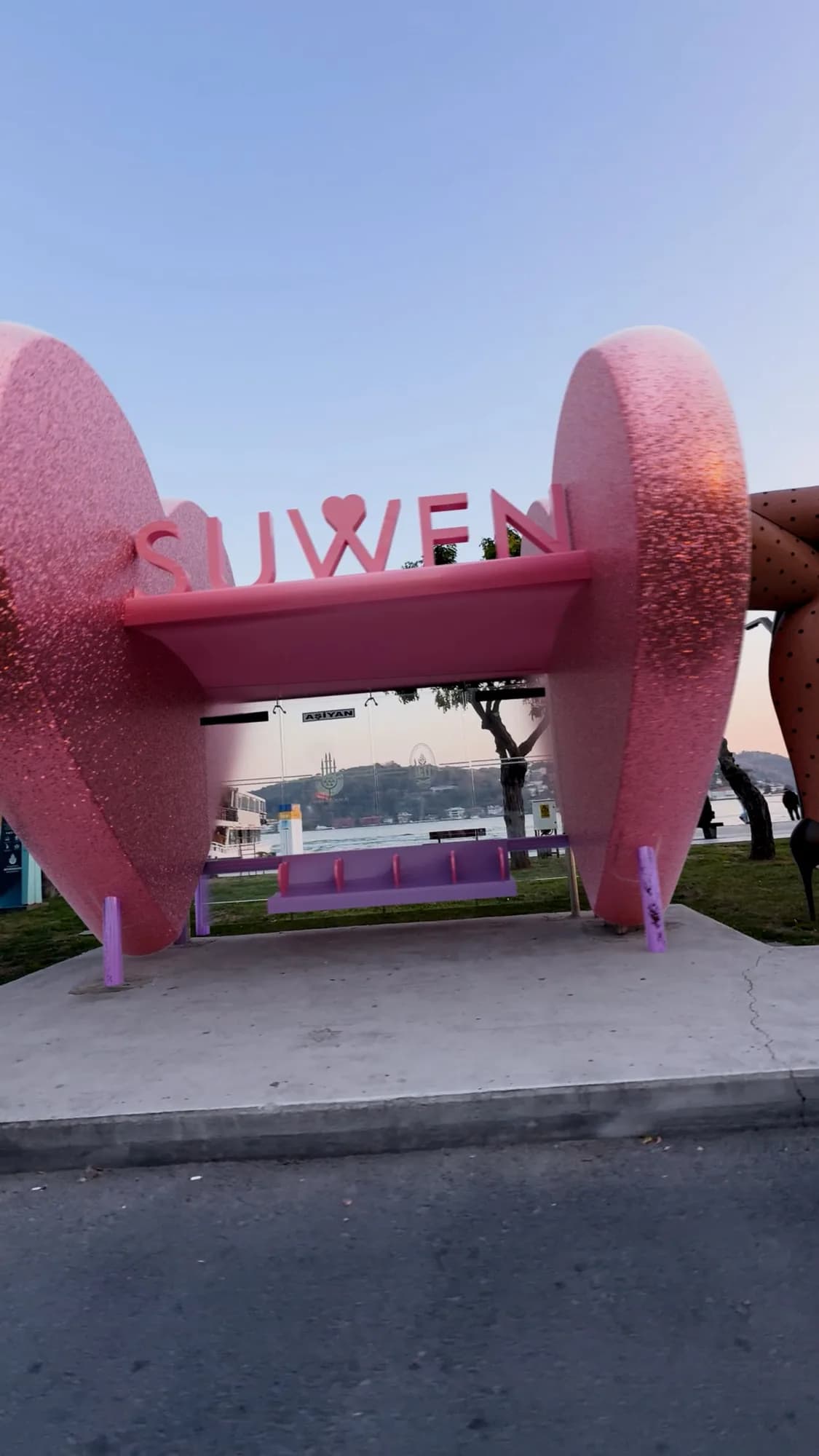
SUWEN bus stop: An ordinary bus stop became a brand showcase through a digital installation sitting naturally within real street footage. The bus shelter, the most familiar OOH site of all, turned into a scene that puts the collection on display at city scale. The film was made in vertical format for social feeds and passed 58M+ views. Project page.
PROJECT VIDEO
MAD Parfum billboard breakout: A giant perfume bottle smashes through a city billboard. The film turns conventional outdoor advertising into an immersive brand experience built to spark conversation online, and it is our clearest example of the "product breaking out of the billboard" idea. Project page.
PROJECT VIDEO
Estrid billboard: An ordinary billboard becomes an unexpected illusion that puts the brand front and centre in the cityscape. The scene is built to make viewers wonder whether it actually happened, and it was edited vertically as a social-first FOOH film. Project page.
Nutella 3D billboard illusion: The brand becomes a larger-than-life spectacle through a bold 3D billboard illusion. The piece pairs the attention-grabbing power of the 3D billboard format with the reach of FOOH. Project page.
Frequently asked questions
Does FOOH replace classic out-of-home advertising?
No; they do different jobs. Classic OOH gives you continuous visibility at a specific location, FOOH creates a moment that gets shared on social media. For most brands they are planned as two legs of the same campaign.
Do you need to rent a site for FOOH?
No. FOOH has no billboard rental or physical installation in the city; the budget goes into producing the idea. Paid social distribution is planned separately.
Where does a FOOH film run?
On the brand's social channels, in vertical feeds such as Reels, TikTok and Shorts, and in a horizontal version on other digital channels if needed. It is not a site that people watch in person.
What happens when viewers realise the FOOH is not real?
That question is exactly where FOOH gets its power: a believable scene stops the viewer with "Is that real?" and gets them talking. What matters for the brand is that the idea is remembered and shared; for most viewers, the fact that the scene is digital is part of the surprise.
How do we extend our classic OOH campaign into FOOH?
Send us the existing site and creative; we build the "impossible" version of the same idea as a FOOH film. The campaign in the street then continues on social media.
Let's work out where FOOH fits in your out-of-home plan. Send a short brief and we'll reply within 24 hours with an approach: get in touch. For an overview of our work and how we think, see our company deck.