
01ARTICLE
Published on
That is why two FOOH films of the same length can have very different budgets. This piece explains how each item moves the price and what to settle in your brief before you ask for a quote. For the format itself and how it is made, see our FOOH ad production page.
What goes into a FOOH budget?
A FOOH budget is made up of the items that go into producing the idea; there is no billboard rental or physical installation in the city. FOOH (fake out-of-home) is a social video built on real city footage, with giant products added in CGI that are not really there, so the money goes into how believable the scene is rather than into a screen. Paid social distribution is planned separately from production.
The table below sets out the eight items, what each one affects and what it needs from your brief.
| Item | What it affects | What to put in the brief |
|---|---|---|
| 1. Idea and previsualisation | Number of concepts | Goal, key message, reference work |
| 2. Locations and shoot | Number of locations | Preferred city or place, how flexible you are on location |
| 3. CGI complexity | Modelling, simulation, characters, interaction | Product information, a 3D model or photos if you have them |
| 4. Length and versions | Volume of editing | Main film length, short cut-downs |
| 5. Format | Vertical and horizontal framing, safe areas | Channels |
| 6. Revision rounds | Approval stages and amount of rework | Approval flow, who makes the decisions |
| 7. Music and sound | Licensed music or original sound design | Music preference, brand sound |
| 8. | Channels, duration and territories | Where, for how long and in which countries |
The production side: idea, locations and CGI
The production side is the most variable part of the budget, because the same idea can be staged on a single street or across several cities.
1. Idea and previsualisation
The first item is how far the idea is developed before production starts. If you bring a ready idea from your own team or agency, this item shrinks; if you want the idea from us as well, it grows.
3. Complexity of the CGI element
This is usually the item that moves the price most. A giant product standing still is not the same job as an object that parachutes in, splashes into water or interacts with people. Simulations such as liquid, cloth or smoke, animated characters and product details the camera gets very close to all add modelling, lighting and rendering work. If you have a 3D model or good photos of the product, modelling gets shorter.
4. Length and number of versions
The length of the main film is rarely decisive on its own; what matters is how many versions you need. Listing the versions in the brief makes the quote far more accurate.
5. Format: vertical and horizontal
FOOH is mostly watched vertically (9:16), but if you also need a horizontal version, that framing should be planned from the start. When the shoot and the CGI placement are built for both frames, the extra work stays limited; a format added later means reframing the scene.
6. Revision rounds
When the approval flow is clear and the decision makers are involved from the first round, the revision budget stays predictable. In CGI, a product colour or packaging change is a material update, not a reshoot.
7. Music and sound
Sound gets less credit on social than it deserves, yet a scene's believability is often completed by its sound design. Licensed music, an original score or a design built only from ambience and effects each affect the budget in a different way.
Which items does AI FOOH change?
AI FOOH can shift the weight of the budget between items, but it does not make any of them disappear on its own. Depending on the brief, AI FOOH is produced with AI on the desktop or on top of existing footage. In that case these items come to the front:
- Generation and selection rounds: AI produces many attempts, and deciding which one fits the brand takes expert time.
- Product fidelity: the final check is that the label, logo and shape are true to the real product, with CGI corrections where needed.
- Speed and variation: when you need to ride the news cycle, AI FOOH can be a faster option, and it helps when a brief calls for many variations.
We compare which route suits which brief in AI FOOH vs CGI FOOH, and our AI ad film production page covers AI production end to end.
Examples from Clytech
Clytech is a CGI, FOOH and AI advertising studio based in Istanbul and London; we have worked with 85+ brands in more than 15 countries. The four projects below show how the budget items take shape around different ideas.
SUWEN — one location, one strong idea. In the CGI film we produced for Suwen, an ordinary bus stop becomes a brand showcase through a digital installation that sits naturally within real street footage. Cut in vertical format, the film passed 58 million views. It shows that a big result does not require many locations; a clear idea can work in a single scene.
PROJECT VIDEO
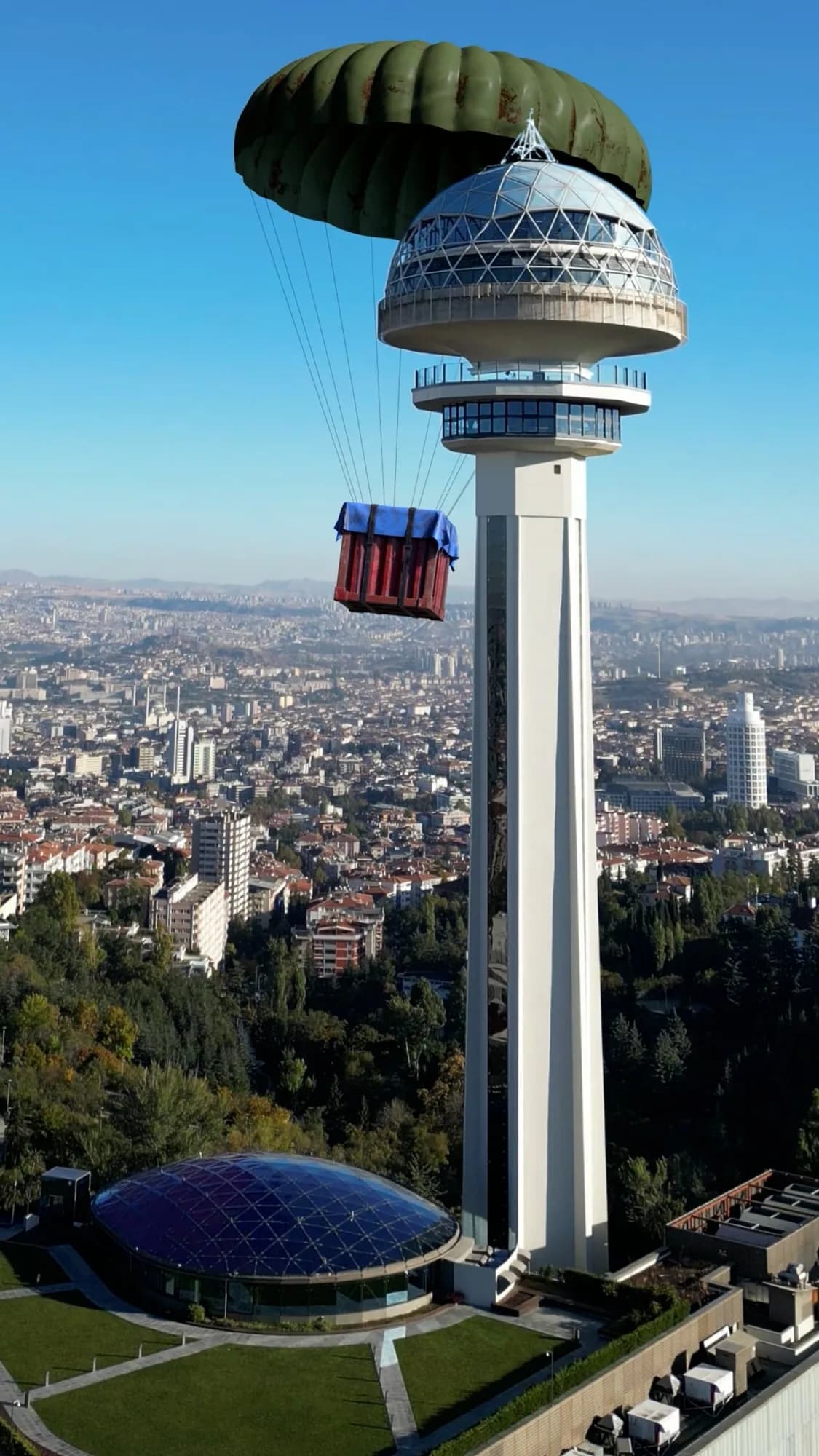
PUBG Mobile — one idea, six regions. In the FOOH campaign we produced for PUBG Mobile to mark the 100th anniversary of the Republic of Turkey, giant in-game supply drops descend by parachute over iconic skylines in Istanbul, Ankara, Izmir, Antalya, Mardin and the Black Sea region. The campaign passed 30 million views. Because every skyline is its own scene, with its own footage, light and CGI placement, it shows clearly why the number of locations is a budget item in its own right. We tell the full story of the campaign in a separate piece.
PROJECT VIDEO
Paşabahçe — an AI-assisted FOOH. In our FOOH piece for Paşabahçe, a giant gift box is planted in the middle of the city. Built with AI-assisted production, the scene turns the brand's giftware into a street-scale illusion, and the video is cut short and punchy for digital channels.
Galata Tower — an AI FOOH experience. In this AI-driven FOOH piece, Istanbul's most recognisable landmark gets a surreal makeover that places the city's historical texture and mind-bending CGI visuals in the same scene. The video was built for viral sharing.
Frequently asked questions
Can you give a price range for FOOH?
We do not give ranges before seeing a brief, because each of the eight items changes from project to project and a generic range would mislead you. Send a short brief and we will reply within 24 hours with an approach; the quote is then built on these items.
Is FOOH cheaper than a billboard campaign?
They are different kinds of spend. FOOH has no billboard rental or physical installation, and the budget goes into producing the idea; paid social distribution is planned separately. A fair comparison starts with where the campaign wants to reach its audience. We put the two channels side by side, on where they are seen, who sees them and where the budget goes, in FOOH vs OOH: what's the difference.
How can we bring the budget down?
The most effective moves are committing to one clear idea, keeping locations to what the goal actually needs, listing versions and formats up front and keeping the approval flow short. Sharing a 3D model or good photos of the product also shortens modelling.
Is a view guarantee included in the price?
No; nobody can honestly promise views. What we deliver is an idea designed to be shared and a believable production, and we show our results with the platforms' own counters.
How is this different from CGI ad film pricing?
The logic is the same: scene complexity sets the price, not length. FOOH adds the location item and the work of matching CGI to real location footage. We cover the CGI side in what decides the price of a CGI ad film.
The fastest way to pin down your budget is to give short answers to these eight items. Use our ad film brief template to write them up, then send us your brief and we will come back within 24 hours with an approach, item by item. If you would rather see the work first, our studio presentation brings our FOOH projects together, and all of our services are on the services page.