
01ARTICLE
Published on
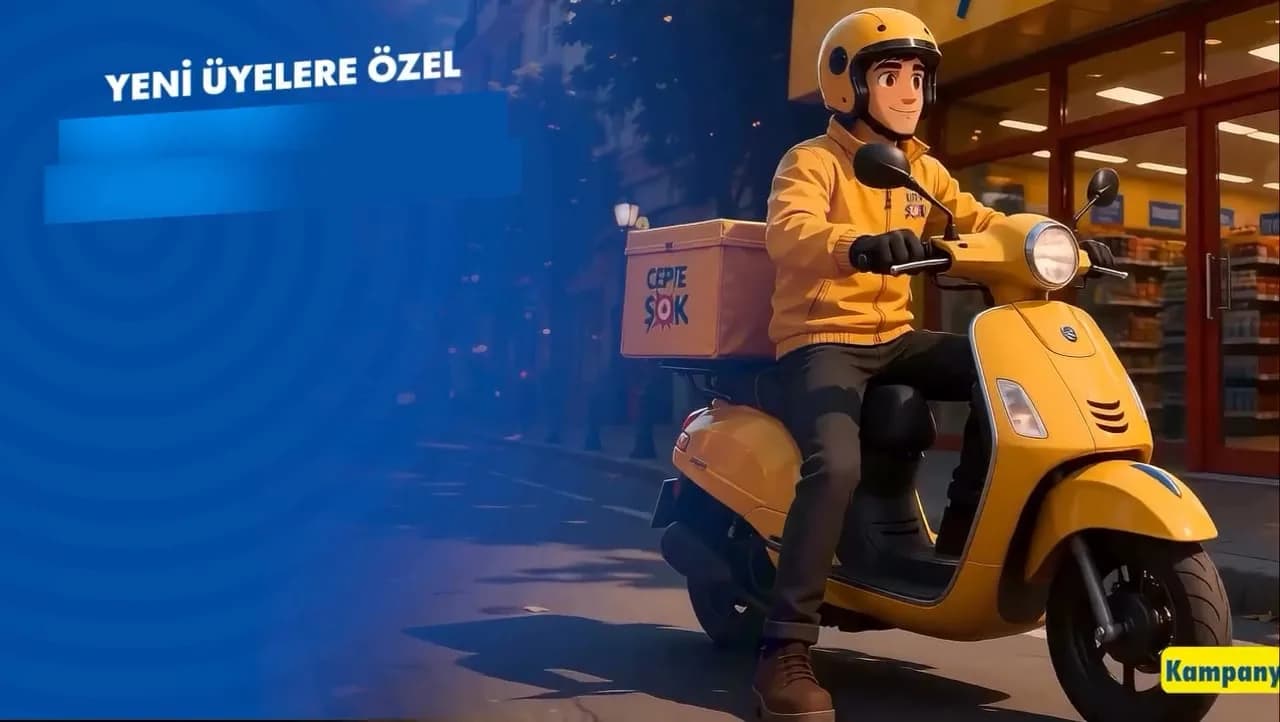
Designing an AI brand character means exploring a mascot or brand figure with generative AI tools, then taking the chosen design into production so it stays the same in every scene. AI adds the most value in two places: it lets you see many character directions quickly, and it makes it easier to carry the character into new scenes and formats. The hard part is consistency; the face, proportions and colours have to hold from frame to frame.
This article covers where AI helps in character design, how consistency is protected and how a character lives on TV and social media. At the centre is Cepte ŞOK, the character we designed with AI for ŞOK, which aired on national TV. We produce this kind of work as part of our AI ad film production service.
What is an AI-designed brand character?
An AI-designed brand character is a recurring figure whose look, expressions and visual world are built with generative AI tools and used again and again in a brand's communication. It can be a person, an animal, a talking product or an invented creature. What separates it from a one-off image is continuity: the character appears as the same individual across many of the brand's films, posts and screens, not just in a single campaign.
In classic mascot design, an illustrator or 3D team starts with a few sketches, and the chosen direction then goes through a long modelling and animation process. AI doesn't change that order, but it widens the exploration stage: the brand can see and compare far more directions before committing. The decision is still made on the brand's tone, its audience and where the character will live.
Where does AI help in character design?
AI helps most with concept exploration and producing variations; brand rules and the team's choices have the final say. Stage by stage, it looks like this:
| Stage | What AI does | What the team does |
|---|---|---|
| Concept | Visualises different character directions, styles and colour worlds quickly | Picks the directions that fit the brand's tone and drops the rest |
| Character sheet | Generates the chosen direction from different angles and with different expressions | Locks the rules for face, proportions, outfit and colour |
| Scenes and variations | Carries the character into new scenes, poses and formats | Checks every frame against the character sheet and approves it |
| Finishing | Generates extra frames and backgrounds where needed | Handles edit, colour, sound and, when needed, CGI fixes |
The key point is that AI speeds up production, but it doesn't make the choice. Finding the one image that belongs to the brand among hundreds, and checking details that must look right, such as a product or an app screen, is the team's job. We walk through the full pipeline in our article on the AI ad film process.
How do you keep an AI character consistent?
Consistency comes from a fixed reference, known as a character sheet, and from checking every scene against it. AI can introduce small differences with each generation: an eye colour shifts, the face gets a little longer, a detail on the outfit disappears. Drifts you wouldn't notice in a single image stand out straight away in a film or a long social series.
This is the checklist we work with:
- Character sheet: front, side and back views, core expressions, colour codes and outfit details in one file.
- List of constants: the features that never change in any scene (facial structure, proportions, signature colour), written down.
- Scene-by-scene approval: every frame is compared with the character sheet before it moves to the next stage.
- Correction layer: details that drift are fixed in the edit, in colour work or, when needed, with CGI.
- Voice and movement rules: if the character speaks, its tone of voice and range of expressions are locked as part of the character too.
That discipline is what turns a character from a single film into a brand asset you can use for years. The character sheet also becomes a shared language: the agency, the brand and the production team all talk while looking at the same reference.
How is an AI character used on TV and social media?
The same character does a different job in each channel, so the delivery package is planned around the channels from the start. An AI-built character can reach broadcast standard: Cepte ŞOK, the character we designed for ŞOK, aired on national TV and reached 5.6 million views.
- TV and horizontal commercials: where the character is seen in the most detail. Broadcast quality, colour and sound standards decide the work here.
- Vertical social content: short, frequent pieces, often in a series. The character needs to be recognisable in the first second and identical in every episode.
- Apps and digital products: if the character represents an app, screenshots, notification visuals and store pages should speak the same language.
- In-store and DOOH screens: short loops, often watched without sound.
Which channel comes first also shapes the decisions on the character sheet. If the character will only live in vertical content, a simpler design may be enough; if it is heading for TV, the level of detail and the range of expressions are built wider from day one.
Why settle brand safety and usage rights up front?
When you create a character with AI, likeness, copyright and brand rules should be discussed before production starts, because the character is meant to be a long-term brand asset. In our process, these questions are settled at the quote stage:
- Does the character resemble a real person or a well-known figure, and is that resemblance intended?
- In which channels, and for how long, will the character be used?
- Do the terms of the AI tools involved fit that use?
- Who signs off the character's constants and brand rules?
This isn't legal advice; for contract details, work with your own legal team. But asking these questions early means that when people take to the character, you can grow it with confidence. The criteria behind the AI or CGI decision apply here as well: if the product has to look exactly right next to the character, CGI can take over in those scenes.
Examples from Clytech
Clytech is a CGI, FOOH and AI advertising studio based in Istanbul and London. Three of our character-led AI projects show three different approaches.
The Cepte ŞOK character. For Şok Marketler's Cepte Şok shopping app, the entire world of the campaign, from character design to visual style, was built with AI tools. Every detail, from the character's expressions to the colour palette, was tuned to match the brand's energetic tone. The film aired on national TV and reached 5.6 million views. See the Cepte ŞOK project.
PROJECT VIDEO
ŞOK Talking Fruits. In this series for ŞOK, the fruits do the talking, so the character grows out of the product itself. The Peach, White Nectarine and Red Nectarine episodes are vertical films produced with AI. A series format shows why consistency matters: every episode has to speak the same language. Watch the Talking Fruits: Peach film.
PROJECT VIDEO
FEVK.AI: A Generation's Trauma, Gulyabani. Made with FEVK.AI for Halloween, this film digitally revives Gulyabani, the legendary monster of Turkish horror cinema. Here the character isn't created from scratch; a figure viewers first met on screen as children is reinterpreted in a dark, atmospheric visual language. See the Gulyabani film.
More of our AI work is collected in AI advertising examples from Turkey.
Frequently asked questions
Can an AI-designed character run on TV?
Yes. Cepte ŞOK, the character we designed with AI for ŞOK, aired on national TV and reached 5.6 million views. Edit, colour and sound work to broadcast standard are part of the production.
Can you reinterpret our existing mascot with AI?
An existing character can be used as the reference and carried into new scenes and formats; that is how we revived a well-known figure in the Gulyabani film. Before we start, we write down the character's constants and brand rules together.
Will the character look the same in every film?
Consistency is protected with a character sheet, scene-by-scene approval and, when needed, CGI correction. AI on its own won't give the same result in every frame, which is why checking is built into production.
How are usage rights for the character decided?
We agree usage rights, channels and duration at the quote stage, and the terms of the AI tools used are part of that review. For contract details, we recommend getting your own legal team's view.
How long does character design take?
Exploration rounds, approval steps and the number of scenes you need set the timeline. Going from concept approval to delivery takes days rather than weeks on most projects; we confirm the exact schedule after the brief.
A good brand character doesn't end with one film; built well, it becomes the face of the brand for years. AI speeds up finding the character and multiplying it, and a disciplined pipeline keeps it consistent. Share a short brief on where your character will live and what it should stand for: get in touch and we'll reply within 24 hours with an approach. You can also see our studio and work in our company presentation.